Guide
Caviar in Marbella: Where to Taste It and Where to Buy It to Take Away
By Diogo BritoPublished 14 min read
Where to eat caviar in Marbella, where to buy a tin to take home, and what the difference between Beluga, Oscietra, Almas and Baerii really is, from the restaurant that sells six caviars under its own name in Puerto Banús.
Your table in three steps
Step 1 of 3
- When
- Guests
- Details
In this guide
- Where to Eat and Buy Caviar in Marbella
- Beluga, Oscietra, Almas, Baerii: the Six Caviars in Puerto Banús
- Beluga vs Oscietra vs Almas vs Baerii: Comparison Table
- How Much Is Caviar in Marbella, and How Much Should You Order?
- What Do Beluga 000 and 00 Mean? Almas and Baerii Explained
- How to Serve and Eat Caviar
- Caviar on Seafood: Oyster, Sea Urchin and Scallop
- What to Drink with Caviar: Champagne, Vodka or Something Alcohol-Free
- Caviar to Take Away from Puerto Banús
Where to Eat and Buy Caviar in Marbella
The short answer: in Puerto Banús. DioGo's Seafood, Meat & Wine, two minutes' walk from the marina at Calle Francisco Villalón 11, keeps six caviars on its menu, all packed under the restaurant's own label. You can eat any of them at the table, and five of them, Beluga 00, Beluga 000, Almas and both Baerii, are also sold to take away.
It helps to know what you are looking for. On many menus caviar appears only as a garnish, a few grains on a blini or a tartare, which is pleasant but tells you little about the caviar itself. A list of different caviars in different tin sizes lets you choose the sturgeon, the grade and the quantity, and taste before you buy. Here you can do both in one evening: try a spoonful at dinner, then leave with a tin for the villa, the yacht or a celebration later in the week.
This guide explains what each caviar on the list is, how the grades and tin sizes work, how much to order, how to serve it properly and what to drink with it. If you are only looking for an address, it is at the top of this paragraph. If you want to order well, read on.
Hungry already?
Book your table now, it takes less than a minute. We confirm within about 15 minutes.
Beluga, Oscietra, Almas, Baerii: the Six Caviars in Puerto Banús
Caviar is the salted roe of sturgeon, and the name on the tin tells you which sturgeon it came from. That single fact decides most of what you taste: the size of the grain, its colour, how firm it is and whether the flavour leans towards butter, nuts or the sea. Everything else, salt, handling and age, is the producer's craft.
The six caviars below all carry the DioGo's label on the lid. The notes come from our own menu, written plainly, so you know what to expect before you choose.
Look at the colour and the size of the grain before you taste. Larger grains usually mean a softer, more buttery bite; smaller, firmer grains a more direct, saltier one. Colour runs from near-black through olive and amber to the pale gold of Almas, and it says more about the sturgeon than about quality: a dark caviar is not a lesser caviar, just a different fish.
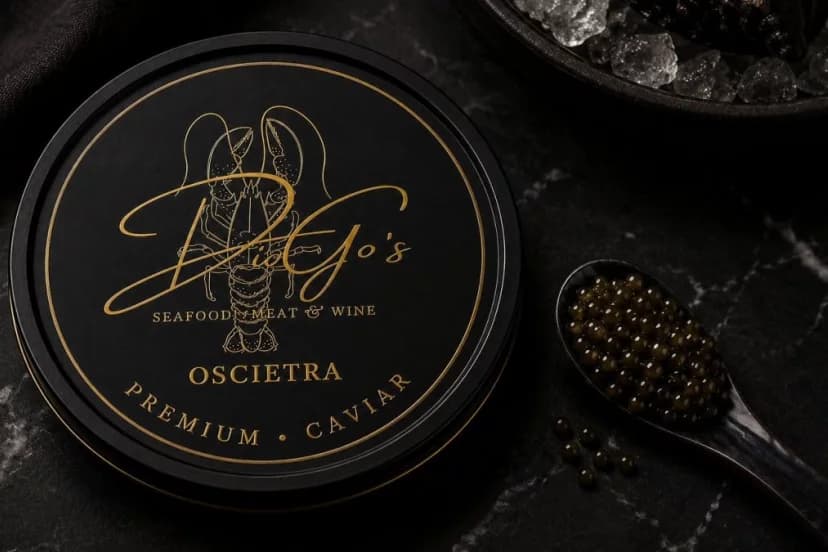
Caviar Oscietra
Oscietra
Acipenser gueldenstaedtii
Medium-sized grains from golden to amber brown, with a rich, nutty flavour and a smooth finish. The most versatile caviar on the list and the only one in four tin sizes, from 30 g to 250 g.
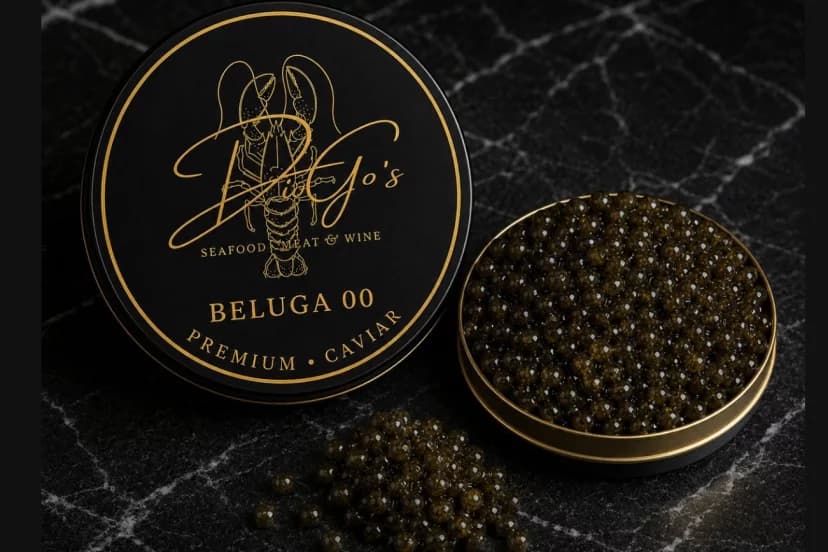
Caviar Beluga 00
Beluga 00
Huso huso
Large, silky grains with a smooth, buttery taste. Beluga is the sturgeon famous for the biggest grains of all, and this is its classic grade, served in a 30 g tin.
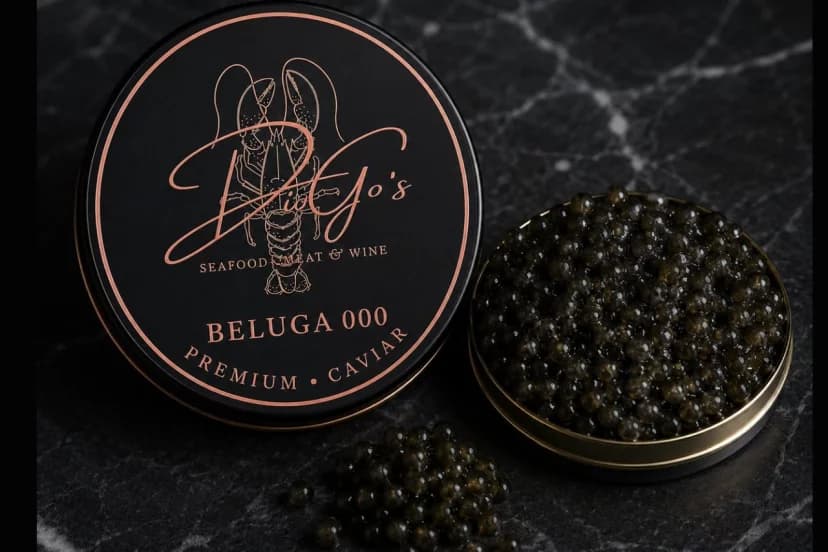
Caviar Beluga 000
Beluga 000
Huso huso
The top grade of our Beluga: large, delicate grains with an intensely smooth, creamy flavour. Served in a 50 g tin, which makes it a caviar to share.
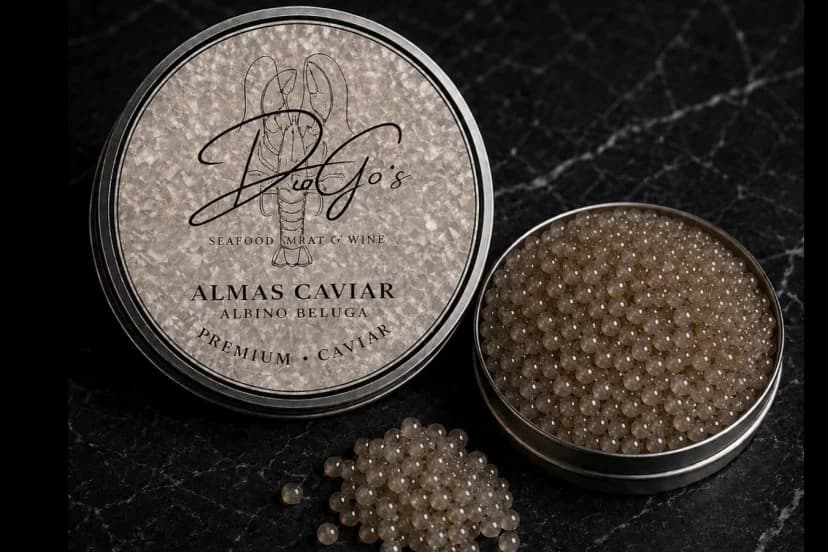
Caviar Almas
Almas
Huso huso
Pale, golden grains from albino beluga sturgeon, famously rare and instantly recognisable on the spoon. Smooth and buttery with subtle nutty notes. Served in a 30 g tin.
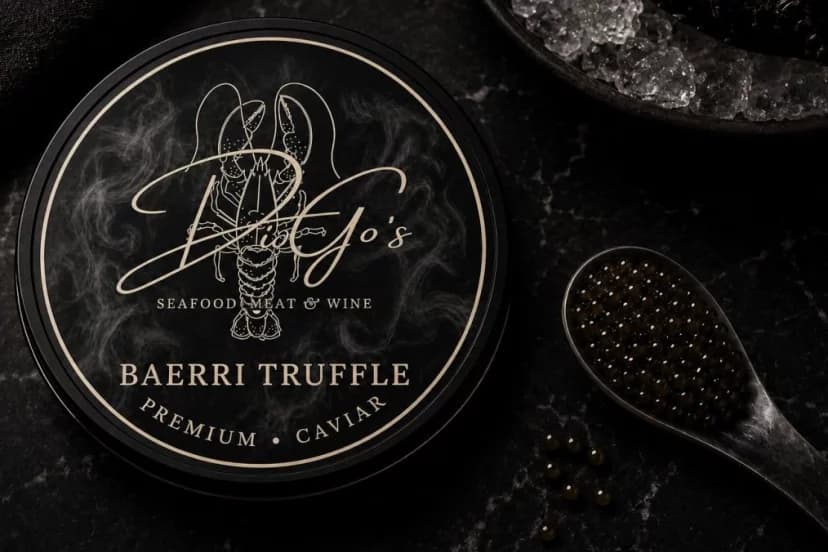
Caviar Baerii con trufa
Baerii with truffle
Acipenser baerii
Baerii caviar with an elegant touch of black truffle: a creamy texture and a deep, earthy aroma. A good choice for anyone who likes bold flavours. Served in a 30 g tin.
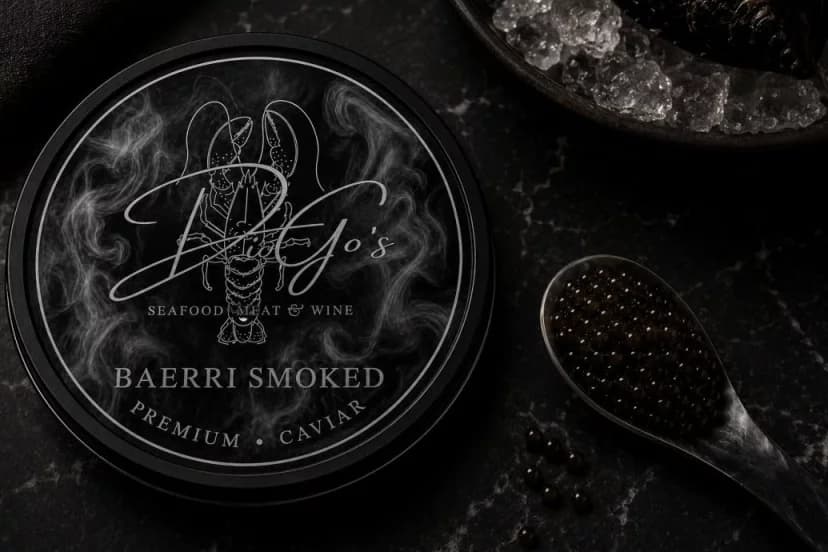
Caviar Baerii ahumado
Smoked Baerii
Acipenser baerii
Baerii caviar with a subtle smoky finish over a rich, buttery texture. Unusual and very good with a glass of cold champagne. Served in a 30 g tin.
Beluga vs Oscietra vs Almas vs Baerii: Comparison Table
If you are choosing between them, this table puts the six side by side. Grain and taste follow the descriptions on our caviar menu; tin sizes and take-away availability are exactly what the menu lists today.
A rule of thumb for first-timers: Oscietra if you want a classic, rounded caviar; Beluga if you want to know what the fuss is about; Almas if the occasion calls for something you will remember by colour alone; one of the Baerii if you like a caviar with a second flavour in it.
One note on the last column. "Yes" means the caviar has its own take-away price on the menu, so you can buy a tin to take with you. For Oscietra there is no separate take-away price listed, so the simplest thing is to ask when you book and we will tell you what is possible that week.
| Caviar | Sturgeon | Grain | Taste | Tin sizes | To take away |
|---|---|---|---|---|---|
| Oscietra | Russian sturgeon | Medium, golden to brown | Rich, nutty, smooth finish | 30 g, 50 g, 100 g, 250 g | Ask when you book |
| Beluga 00 | Beluga | Large, silky | Smooth, buttery | 30 g | Yes |
| Beluga 000 | Beluga | Large, delicate | Intensely smooth, creamy | 50 g | Yes |
| Almas | Albino beluga | Pale, golden | Buttery, subtle nutty notes | 30 g | Yes |
| Baerii with truffle | Siberian sturgeon | Smaller, dark | Creamy, earthy black truffle | 30 g | Yes |
| Smoked Baerii | Siberian sturgeon | Smaller, dark | Buttery, light smoke | 30 g | Yes |
Hungry already?
Book your table now, it takes less than a minute. We confirm within about 15 minutes.
How Much Is Caviar in Marbella, and How Much Should You Order?
Caviar is always priced by weight, and on a menu the weight is the size of the tin. That is the first thing to check: a price next to "30 g" and a price next to "50 g" are not two versions of the same dish, they are two different quantities. The table below reads the current prices straight from our menu, including every tin size and the separate take-away price, so there is no guessing and no figure copied into this text that could go out of date.
How much to order is mostly a question of how you want to eat it. As a general rule, a 30 g tin is a tasting for one or two people: enough for several generous spoonfuls each, eaten slowly with a glass of champagne. A 50 g tin suits two people who want caviar to be the main event of the evening, or a table of four sharing it as a starter. The larger Oscietra tins, 100 g and 250 g, are for groups and celebrations, when caviar goes round the table rather than sitting in front of one person.
Two tips from experience. If you are new to caviar, it is better to try two different 30 g tins side by side than one larger tin of the same kind: comparing is how you learn what you like. And if you know you want caviar with a seafood dinner, say so when you book, so we can plan the order of the evening around it.
Prices from our menu
See the full menu- Oscietra
- €110 / 30 g
- Oscietra
- €150 / 50 g
- Oscietra
- €300 / 100 g
- Oscietra
- €500 / 250 g
- Beluga 00
- €200 / 30 g
- Beluga 00
- €160 / Takeaway
- Beluga 000
- €230 / 50 g
- Beluga 000
- €190 / Takeaway
- Almas caviar
- €300 / 30 g
- Almas caviar
- €240 / Takeaway
- Baerii with truffle
- €130 / 30 g
- Baerii with truffle
- €105 / Takeaway
- Smoked Baerii
- €130 / 30 g
- Smoked Baerii
- €105 / Takeaway
Taken straight from the current menu, per the unit shown.
What Do Beluga 000 and 00 Mean? Almas and Baerii Explained
The zeros after the word Beluga are a grade, not a size of tin. The convention goes back to the old Caspian caviar trade, where more zeros marked lighter-coloured, and usually larger, grains, and those were the most sought after. Producers still use it today to mark their selections: a 000 is the house's finest pick, a 00 the classic grade below it. There is no single international standard, so read the zeros as the producer's own grading rather than a legal category. On our menu, the Beluga 000 is described as having large, delicate grains and an intensely creamy flavour, the Beluga 00 as large, silky and buttery.
Beluga itself is the name of the largest sturgeon, a fish that takes many years to mature, which is part of why its caviar has always been expensive. International trade in wild Caspian sturgeon has been tightly restricted for years to protect the species, so the caviar you find in restaurants today comes from sturgeon raised on farms.
Almas is the name traditionally given to pale, golden caviar from albino sturgeon; the word is usually translated as "diamond". Albino sturgeon are rare, which is why Almas is famously scarce and why it looks so different on the spoon: ivory to golden grains instead of grey or black. Ours is labelled as coming from albino beluga, with a smooth, buttery taste and subtle nutty notes.
Baerii comes from the Siberian sturgeon, Acipenser baerii, a smaller fish than the beluga. Its grains are smaller and darker, with a clean, direct flavour, which makes it a good base for a second note. That is exactly how we use it: one Baerii with black truffle, one with a light smoky finish.
How to Serve and Eat Caviar
Good caviar needs very little, and most of what goes wrong with it comes from adding too much. These are the classic rules, and they work just as well at home if you take a tin away.
Taste it both ways: pure from the spoon first, then on something soft and neutral. The traditional Russian way is a warm blini with a little crème fraîche. The simplest way is straight from a small spoon, slowly, with a sip of something cold and dry in between.
The difference between eating caviar well and eating it badly is mostly speed and temperature. Take small spoonfuls, let the grains roll on your tongue, then press them gently so they break: that is when the flavour comes, first salt, then butter or nuts, then a long, clean taste of the sea.
Keep it cold
Caviar should be served very cold, ideally with the tin sitting on crushed ice. Warm caviar loses its snap and turns oily.
Never a metal spoon
Use mother-of-pearl, bone, horn or even plastic. Silver and steel can leave a metallic taste on the grains.
Taste it on its own first
Put a small spoonful on the back of your hand or straight onto the tongue, and press the grains gently against the roof of your mouth instead of chewing.
Neutral bases only
If you want something under it, choose something plain: a blini, a thin slice of toasted bread, a boiled potato or a spoon of crème fraîche. Lemon and chopped onion hide the flavour of good caviar.
Open it just before serving
Open the tin only when everyone is sitting down, and finish it at the same meal. Caviar is at its best in the first minutes after the lid comes off.
Lift, do not stir
Take the grains from the top with a gentle scoop. Stirring or pressing crushes them and turns a tin of caviar into paste.
Caviar on Seafood: Oyster, Sea Urchin and Scallop
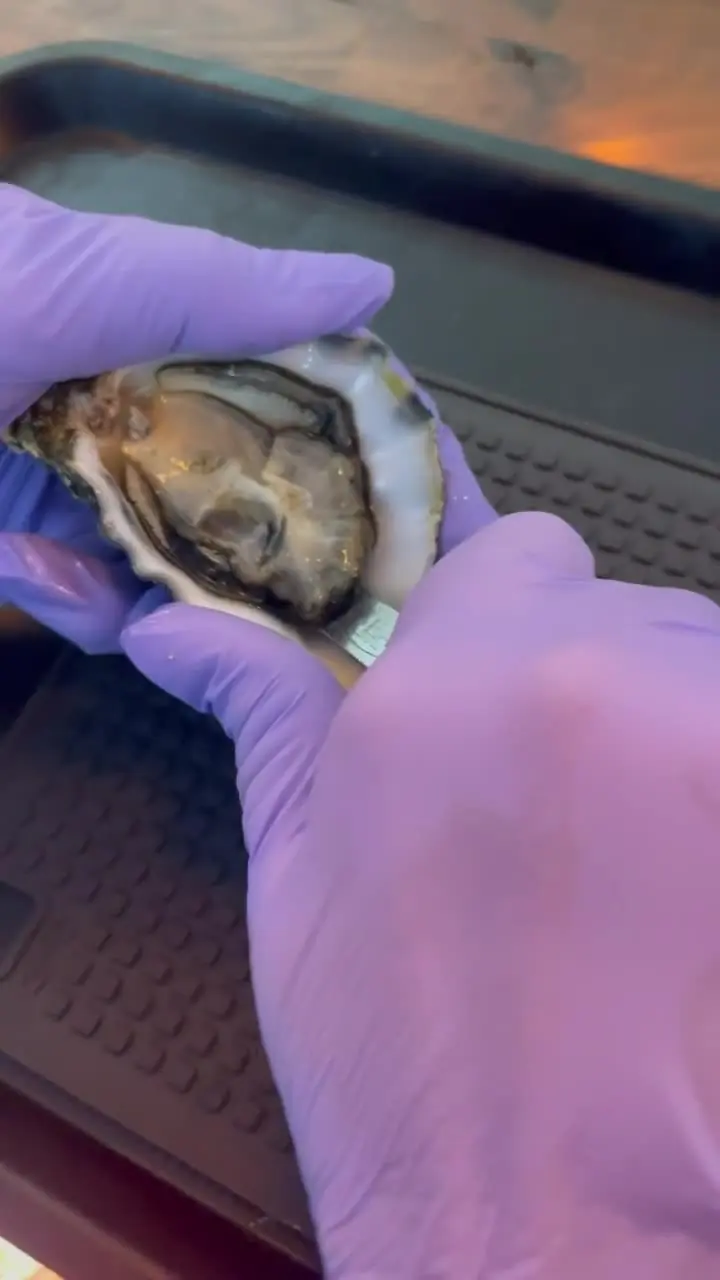
Caviar on its own is the purist's choice. Caviar on seafood is where it becomes fun, and a seafood restaurant is the natural place to try it. The idea is always the same: something sweet and soft underneath, and the salty burst of caviar on top.
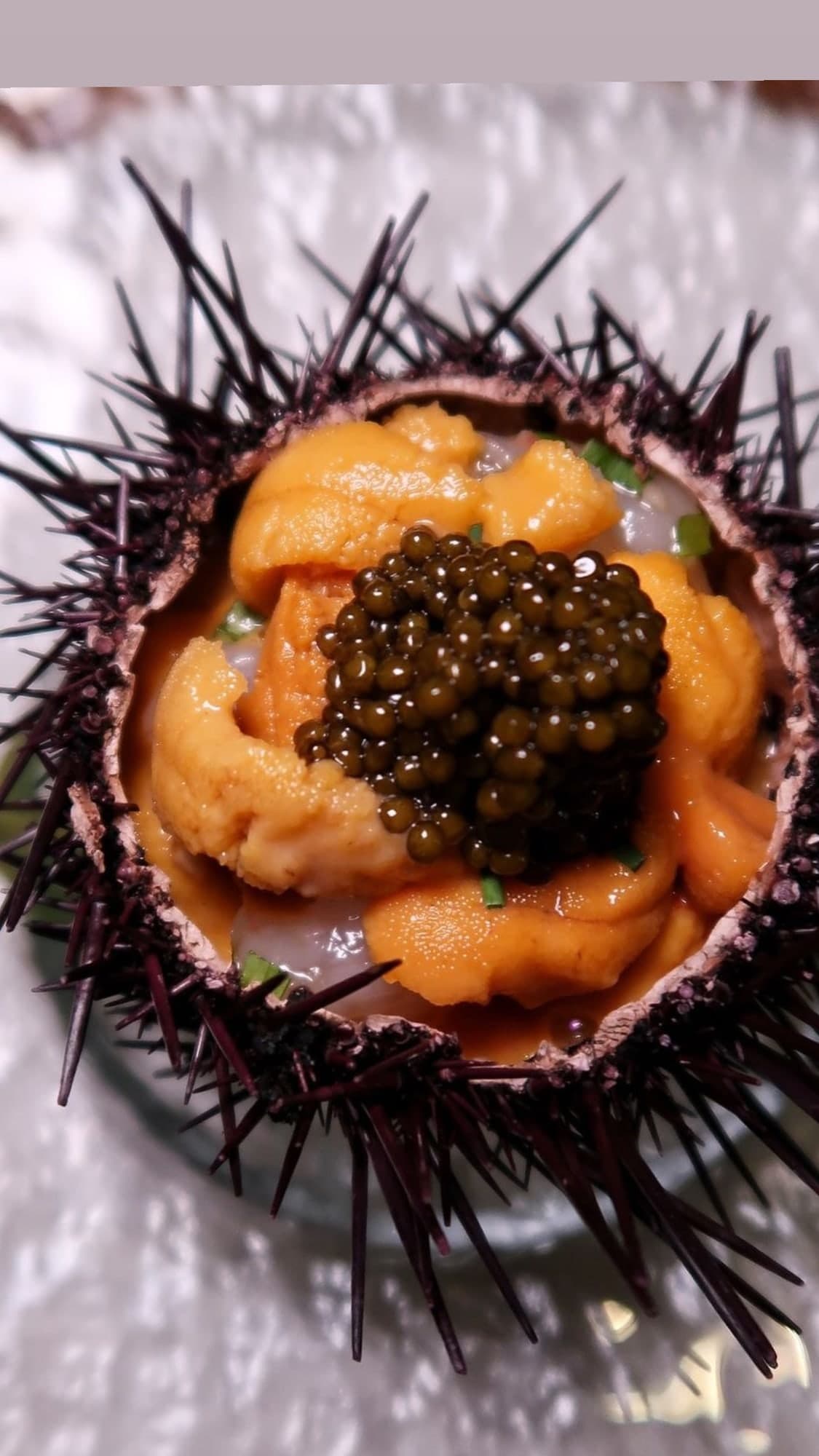
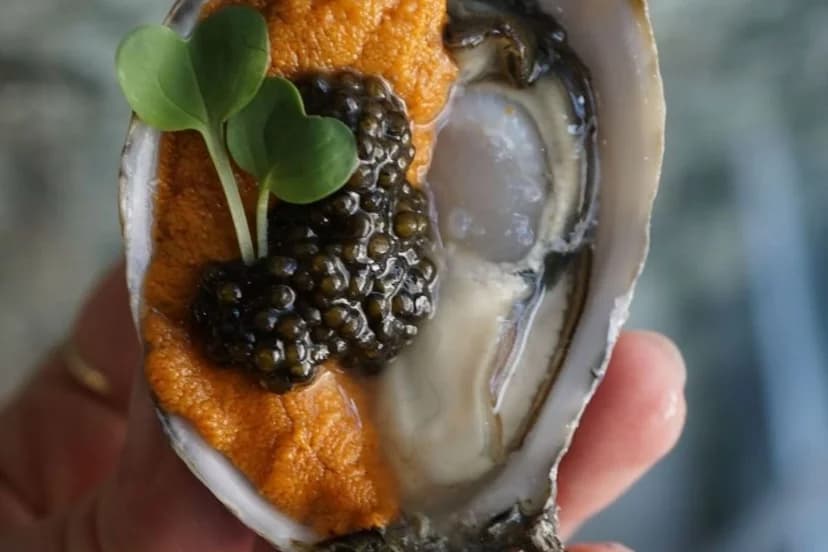
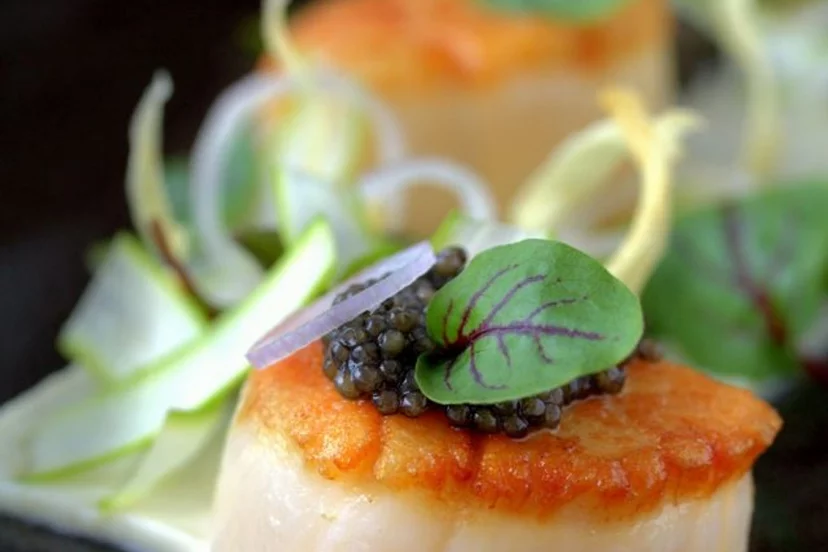
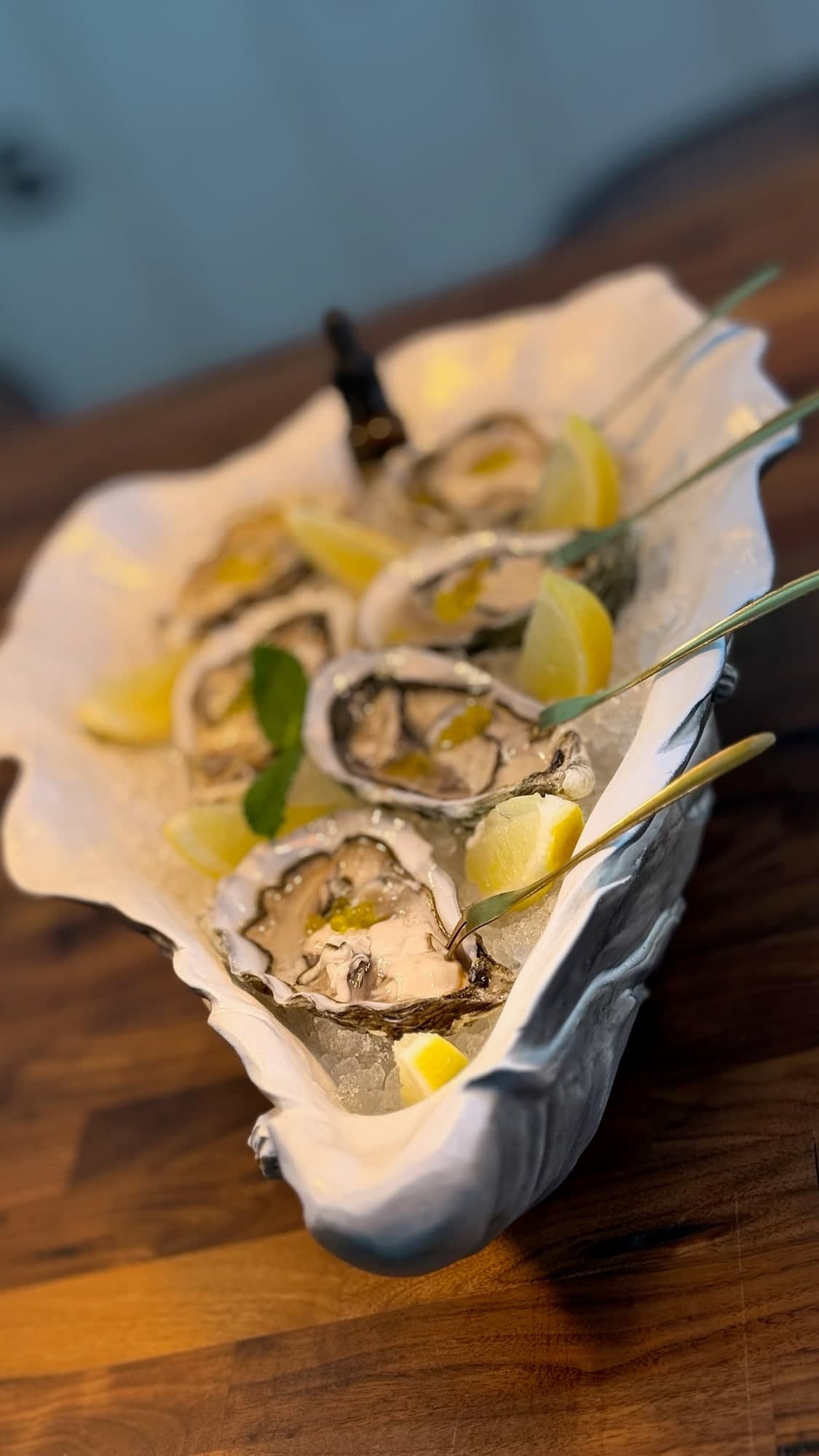
The pairing guests remember is oyster, sea urchin and caviar in one shell: a freshly opened oyster, a tongue of creamy orange sea urchin and a spoonful of caviar, eaten in one go. It tastes of the sea three times over, briny, then sweet, then salty. The scallop version is gentler: a seared scallop, sweet and buttery, crowned with sea urchin and caviar. Both are on our menu as premium bites, and both are a good way to taste caviar if you are not ready for a whole tin yet.
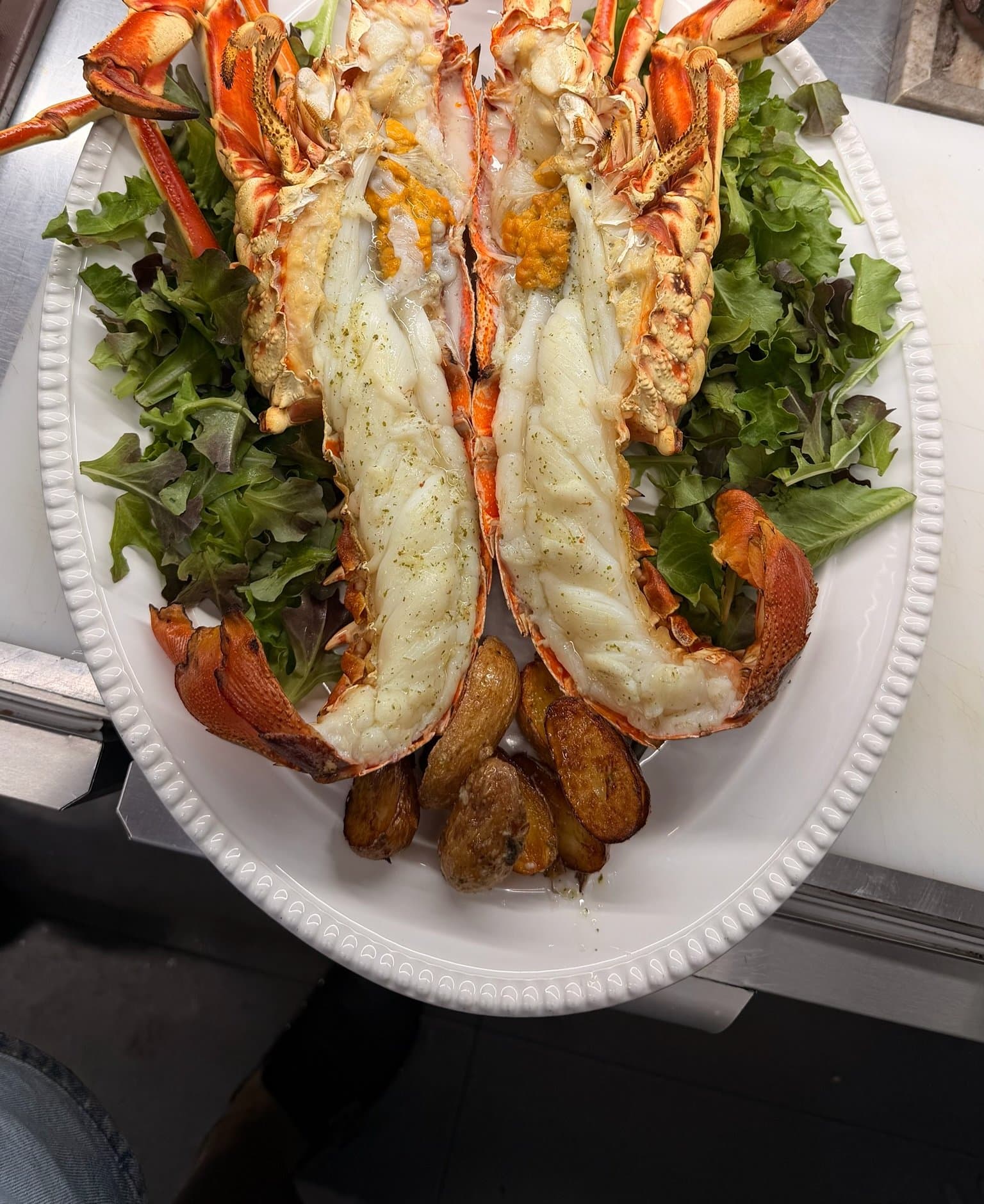
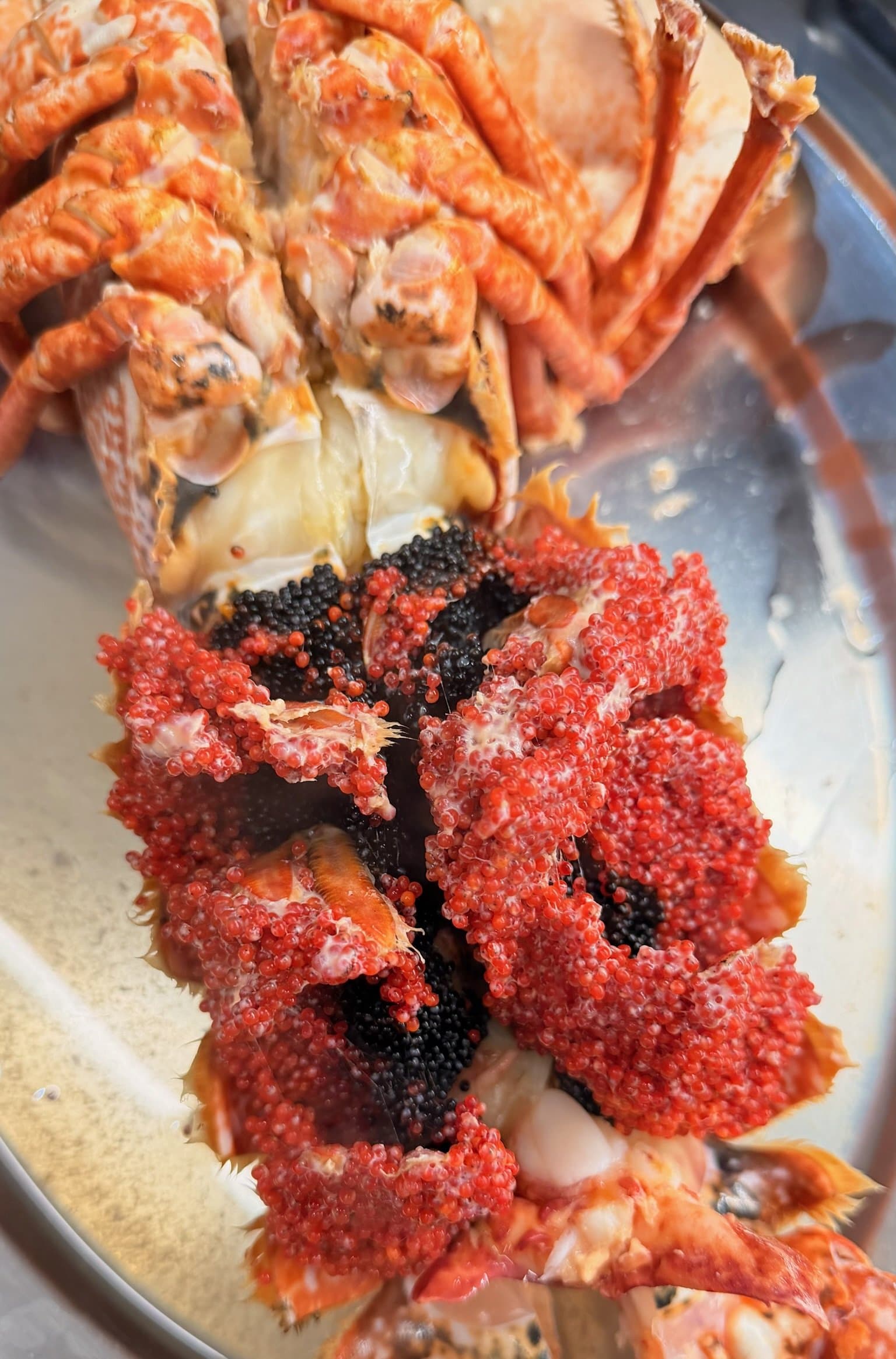
The last photo below shows a pairing for the curious: the bright red roe of a grilled spiny lobster next to black sturgeon caviar, two kinds of roe from two very different animals on the same plate. If you like oysters on their own too, our guide to fresh oysters in Marbella explains the seven French oysters we open to order, and our lobster guide covers the live tank and the charcoal grill.
What to Drink with Caviar: Champagne, Vodka or Something Alcohol-Free
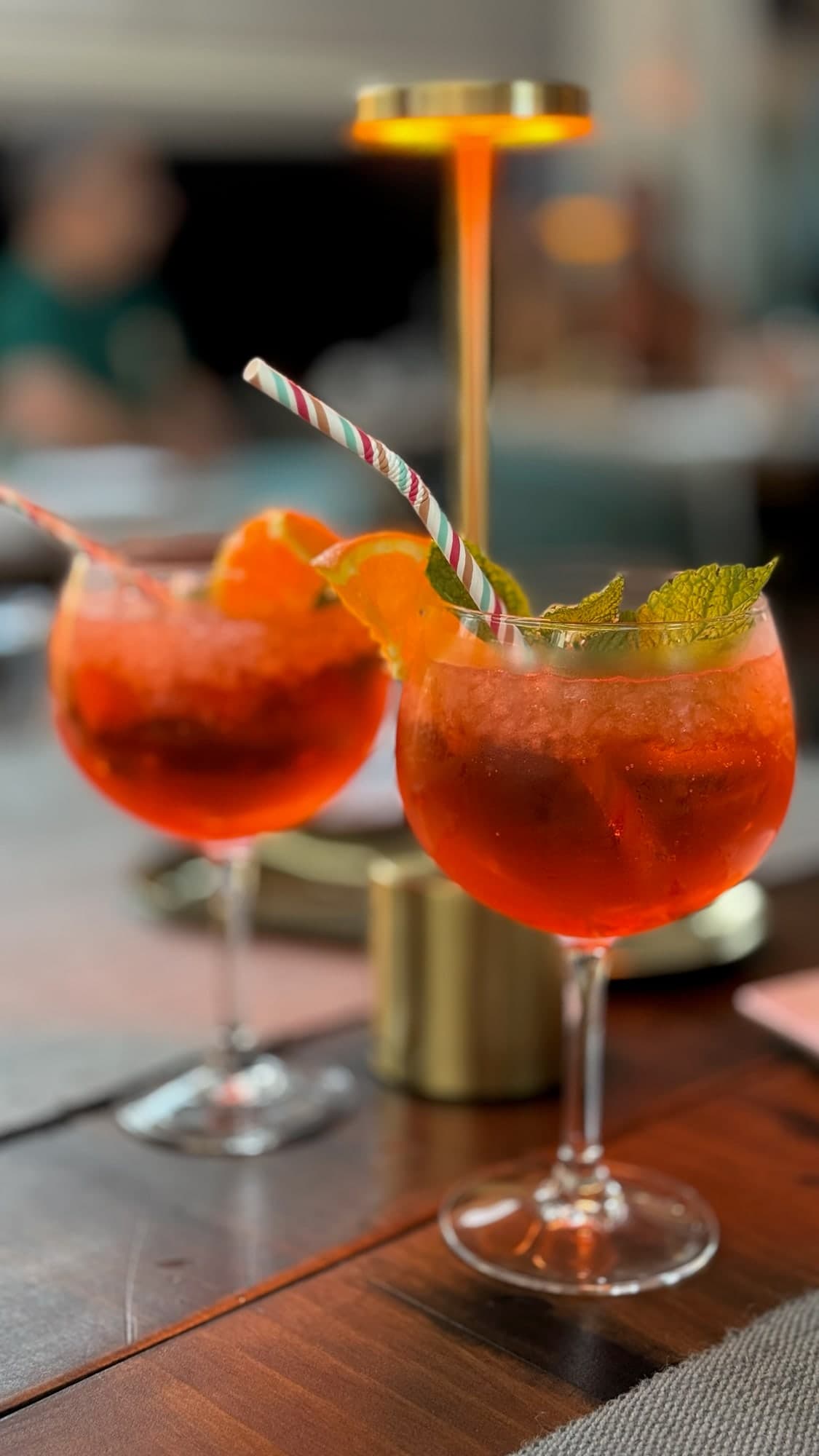
Champagne is the classic partner for caviar, and for a good reason: its acidity and fine bubbles clean the palate after every spoonful, so each one tastes as fresh as the first. Choose dry. A Blanc de Blancs, made only from Chardonnay, is the most elegant match, because its lightness leaves the caviar in charge. On our list that means Ruinart Blanc de Blancs. Perrier-Jouët Grand Brut is a slightly rounder, floral option that works beautifully with the buttery Beluga and Almas, and for a special occasion the list goes up to Salon and Louis Roederer.
Match the champagne to the caviar. The lighter, creamier caviars, Beluga and Almas, shine next to a delicate Blanc de Blancs. The Baerii with truffle and the smoked Baerii have more going on, and they can stand up to a fuller champagne or a rosé such as Perrier-Jouët Blason Rosé. When in doubt, ask us which bottle suits the caviar you have chosen.
The other classic is ice-cold vodka, the way caviar has been eaten in Russia for generations: a small, frozen glass, drunk neat between spoonfuls. It does the same job as champagne with less ceremony, stripping the palate clean so the next grains taste bright and salty again. Whatever you choose, avoid sweet drinks and heavy red wine: sugar and tannin fight with caviar and both lose.
If you do not drink alcohol, sparkling is still the right idea. Codorníu Zero, an alcohol-free sparkling wine, gives you the bubbles and the freshness without the alcohol, and very cold sparkling water with a slice of lime is a perfectly respectable companion for caviar too. Planning caviar and champagne for two? Our guide to a romantic dinner in Puerto Banús puts the whole evening together.


Caviar to Take Away from Puerto Banús
Our caviar is packed under our own name, and you do not have to eat it at the table. Beluga 00, Beluga 000, Almas, Baerii with truffle and smoked Baerii are all on our menu with a separate take-away price. If you want Oscietra or a particular tin size to take away, just ask.
It works simply. Tell us when you book, or ask at the restaurant during opening hours, and we will have your tin ready. The one thing I always say to guests taking caviar with them is this: keep it cold on the way, keep it in the coldest part of the fridge and eat it soon. Caviar is a fresh product, not a souvenir for the shelf.
If you would rather eat it with us, come for dinner. My kitchen is Portuguese at heart: I learned to cook seafood in my grandmother's kitchen in Portugal, simply and over charcoal, and caviar fits that way of cooking perfectly, because it needs nothing added. On the same menu you will find oysters opened to order and lobster from the live tank by the entrance, which we weigh at your table before it goes onto the grill. Gosia runs the room, and our team speaks Polish, English, Spanish, French and Portuguese.
We are at Calle Francisco Villalón 11, two minutes' walk from the Puerto Banús marina, open Tuesday to Saturday from 13:00 to 22:00, closed on Sundays and Mondays. Our guests rate us 4.9 out of 5 on Google. The room is deliberately small, six seats at the walnut bar and a handful of tables on the terrace, so for dinner it is worth booking your table ahead. You can book online, by phone or on WhatsApp, and we confirm within about 15 minutes.
Frequently asked questions
Where can I buy caviar in Marbella?
You can buy caviar to take away at DioGo's Seafood, Meat & Wine in Puerto Banús, which sells caviar under its own label. Beluga 00, Beluga 000, Almas, Baerii with truffle and smoked Baerii are listed on its menu with a separate take-away price; ask when booking or at the restaurant, open Tuesday to Saturday from 13:00 to 22:00.
Where can I eat caviar in Marbella?
In Puerto Banús, DioGo's Seafood, Meat & Wine serves six caviars at the table: Oscietra, Beluga 00, Beluga 000, Almas, Baerii with truffle and smoked Baerii, plus oyster and scallop bites topped with sea urchin and caviar. It is two minutes' walk from the marina, at Calle Francisco Villalón 11.
What is the difference between Beluga and Oscietra caviar?
Beluga caviar comes from the beluga sturgeon and has the largest grains, soft and buttery. Oscietra comes from the Russian sturgeon and has medium grains, from golden to brown, with a nutty flavour. Beluga is usually the more expensive of the two.
What is Almas caviar?
Almas is pale, golden caviar from albino sturgeon, and the name is usually translated as "diamond". Because albino sturgeon are rare, Almas is famously scarce. It has a smooth, buttery taste with subtle nutty notes.
What does 000 mean on Beluga caviar?
000 is a grade used by producers to mark their top selection, traditionally lighter and larger grains; 00 is the classic grade below it. It is a producer's convention rather than an international standard, and it says nothing about the size of the tin.
How much caviar per person should I order?
For a tasting, a 30 g tin is generally enough for one or two people. A 50 g tin suits two people who want caviar as the main event, or four sharing it as a starter. Larger tins of 100 g or 250 g are for groups and celebrations.
How should caviar be served?
Caviar should be served very cold, ideally on crushed ice, and eaten with a mother-of-pearl, bone or horn spoon rather than metal. Taste it on its own first, then with something neutral such as a blini, toast or crème fraîche.
What drink goes best with caviar?
Dry champagne, especially a Blanc de Blancs, is the classic pairing, and ice-cold vodka is the traditional alternative. Without alcohol, choose an alcohol-free sparkling wine or very cold sparkling water. Avoid sweet drinks and heavy red wine.
Can I take caviar home from a restaurant in Puerto Banús?
Yes. DioGo's Seafood, Meat & Wine in Puerto Banús sells several of its own-label caviars to take away, including Beluga, Almas and Baerii. Keep the tin cold on the way home, store it in the coldest part of the fridge and eat it soon after opening.