Guide
Lobster in Marbella: Where to Eat It and How to Order It Right
By Diogo BritoPublished 12 min read
Three different animals hide behind the word "lobster" on a Marbella menu. Here is how to tell them apart, how pricing by weight really works, and where to eat lobster that was alive when you chose it.
Your table in three steps
Step 1 of 3
- When
- Guests
- Details
In this guide
- Where to Eat Lobster in Marbella
- Bogavante, Blue Lobster or Langosta: The Three Lobsters on a Marbella Menu
- Why Choose Your Lobster Alive From the Tank?
- How Much Does Lobster Cost in Marbella? Pricing per 100 g Explained
- Grilled Lobster in Marbella: Charcoal vs Other Spanish Preparations
- How to Eat a Whole Lobster at the Table
- What to Order With Lobster: Starters, Sides and Wine
- Lobster for a Group: Sharing, King Crab and Seafood Platters
- Lobster at DioGo's in Puerto Banús
Where to Eat Lobster in Marbella
The short answer: eat lobster in Marbella at a seafood restaurant that keeps it alive, weighs it in front of you and cooks it simply. Those three things matter more than the view or the length of the menu. A lobster that was alive an hour ago, grilled with olive oil and salt, beats any sauce-covered tail from a freezer.
Puerto Banús is the easiest place to find that combination, with a cluster of seafood restaurants a few minutes' walk from each other around the marina. Before you sit down, look for a tank with animals that are moving, a price written per 100 grams, and staff who will tell you the weight and the total before anything goes near the grill.
One concrete option is DioGo's Seafood, Meat & Wine, at Calle Francisco Villalón 11, two minutes' walk from the marina. The live tank by the entrance holds Canadian lobster, Spanish blue lobster and spiny lobster. You choose yours, it is weighed at your table, and then it goes onto the charcoal grill. It is open Tuesday to Saturday from 13:00 to 22:00, so plan lobster for lunch or an early or classic dinner.
Bogavante, Blue Lobster or Langosta: The Three Lobsters on a Marbella Menu
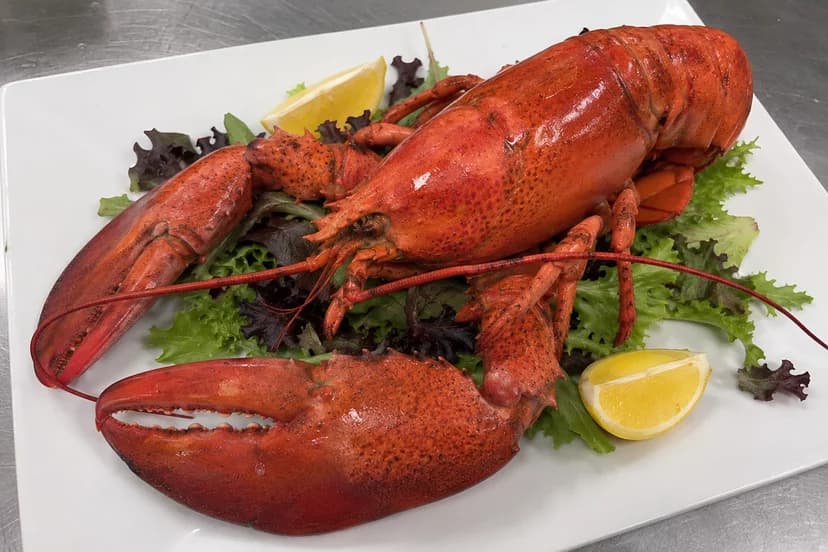
Order "lobster" in Marbella and you can be served one of three different animals. Two are true lobsters with big claws, the Canadian lobster and the European blue lobster, and both are bogavante in Spanish. The third is the spiny lobster, langosta, which has no claws at all. English menus often translate all three as "lobster", so it pays to know the Spanish words.
The Canadian lobster comes from the cold North Atlantic and travels to Europe alive; it is the most widely available, with big, meaty claws and sweet, tender flesh. The European blue lobster lives on the rocky Atlantic coasts of Europe, including northern Spain. It is rarer, and cooks tend to describe its meat as firmer and more intense.
The spiny lobster keeps almost all its meat in the tail, dense and slightly springy, closer to a very large prawn. In Spain it is often the most prized of the three and is frequently sold at the price of the day. Names on menus are not always strict, and you may see langosta used loosely for a clawed lobster too. The claws settle it: two big claws means bogavante.
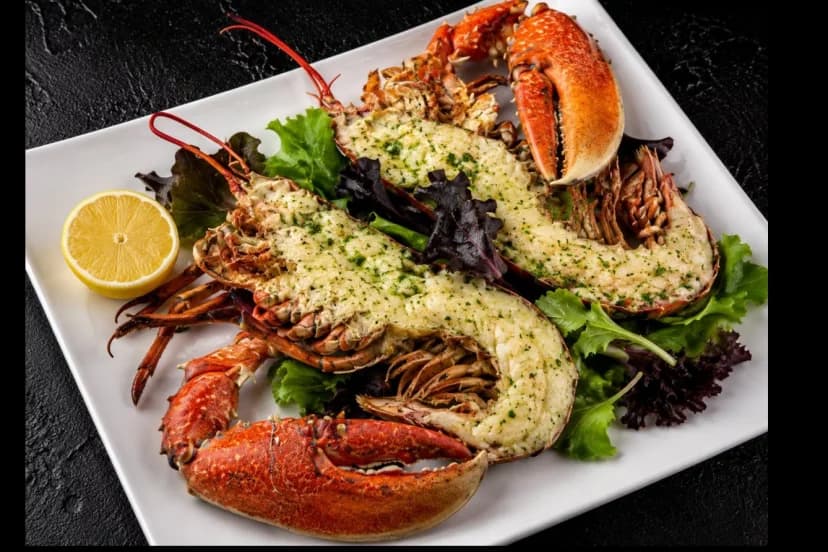
Bogavante canadiense
Canadian lobster
Homarus americanus
The clawed lobster you will meet most often in Marbella. Big claws, sweet and tender meat.
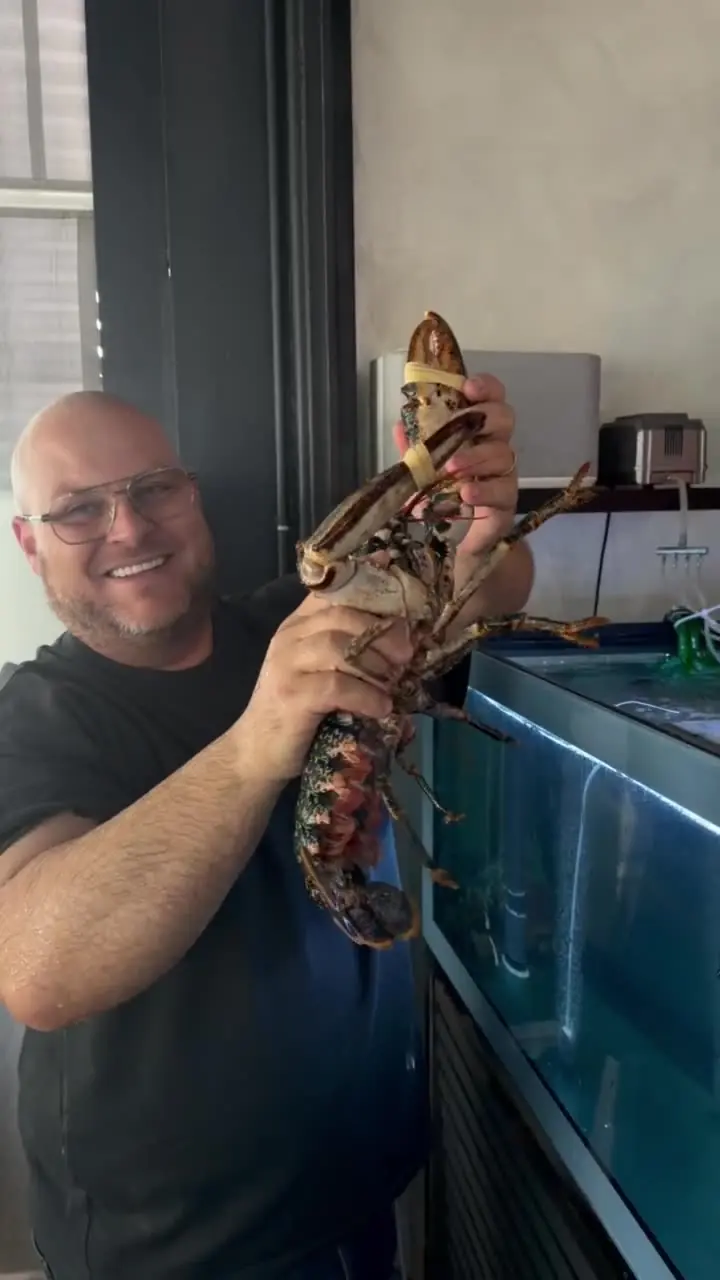
Bogavante azul
European blue lobster
Homarus gammarus
Europe's own lobster, blue in the tank and red on the plate. Firmer, more intense meat.
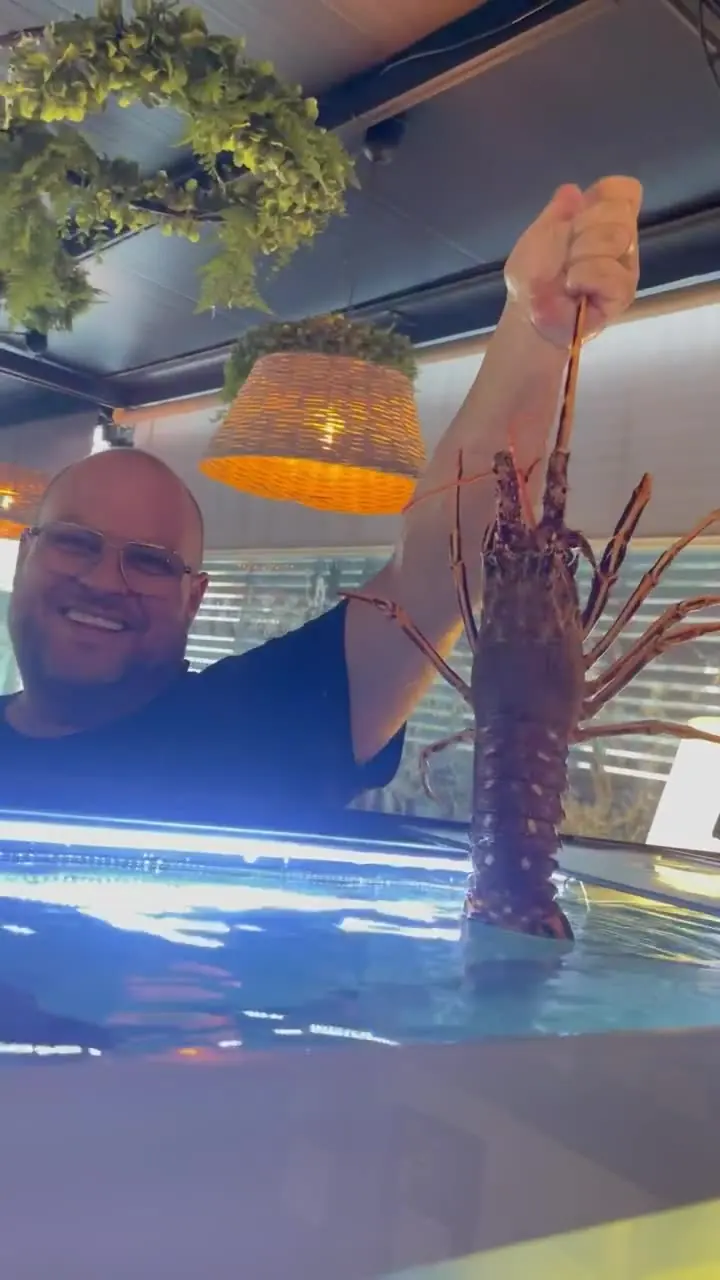
Langosta
Spiny lobster
Palinurus elephas
No claws, a spiny shell and long antennae. The meat is in the tail, and it is superb grilled.
| Canadian lobster | European blue lobster | Spiny lobster | |
|---|---|---|---|
| On a Spanish menu | Bogavante canadiense | Bogavante azul, bogavante europeo | Langosta |
| Latin name | Homarus americanus | Homarus gammarus | Palinurus elephas and relatives |
| Claws | Two large, meaty claws | Two large claws | None, long antennae instead |
| Shell when alive | Greenish brown to dark olive | Deep blue with lighter speckles | Reddish brown and covered in spines |
| Meat | Sweet and tender, a good share in the claws | Firmer and more intense, still sweet | Dense and springy, almost all in the tail |
| Best cooked | Split and grilled over charcoal, or boiled | Split and grilled over charcoal | Split and grilled over charcoal |
| Usual weight at the table | About 700 g to 1.4 kg | About 700 g to 1.4 kg | Varies with the day's supply |
| How it is priced | Per 100 g | Per 100 g | Often price of the day (S/M) |
Why Choose Your Lobster Alive From the Tank?
Lobster spoils quickly once it dies, which is why serious seafood restaurants keep it alive until the moment it is cooked. A tank proves that only if the animals are moving: antennae twitching, legs walking, a tail that curls hard when the lobster leaves the water.
Choosing it yourself is normal practice in Spain, not a favour. Point at the one you like, or say how many people it is for and let the waiter suggest a size. A lively lobster holds its claws up, and it should feel heavy for its size, which usually means a shell full of meat.
Then comes the scale. Weighing at the table is the best protection against a surprise on the bill: you see the number, hear the price per 100 grams and agree on the total before the lobster goes to the kitchen. A restaurant that weighs in the back is asking you to take it on trust.
Hungry already?
Book your table now, it takes less than a minute. We confirm within about 15 minutes.
How Much Does Lobster Cost in Marbella? Pricing per 100 g Explained
Lobster in Marbella is sold by weight, and the menu price is almost always per 100 grams. That small print causes most of the shocks: what looks like the price of a main course is the price of a tenth of a kilo. The table below shows current prices for Canadian and Spanish blue lobster at DioGo's in Puerto Banús, read directly from the menu.
The maths takes ten seconds. A 700 g lobster costs seven times the price per 100 grams, a 1.2 kg lobster twelve times, a 1.4 kg lobster fourteen times. Whole lobsters usually weigh between about 700 grams and 1.4 kilos, so the same line on the menu can mean a bill twice as large depending on which animal you choose.
Spiny lobster is often listed as price of the day, or S/M (según mercado), because its cost moves with the catch. That is normal, as long as someone can tell you the price per 100 grams and the weight of your animal before it is cooked. As for portions: the edible meat is roughly a quarter to a third of the weight, so a 700 g lobster is a generous main for one, and two people sharing should look at 1.1 to 1.4 kilos.
Prices from our menu
See the full menu- Canadian lobster (Bogavante)
- €18 / 100 g
- Spanish blue lobster (Bogavante azul)
- €23 / 100 g
Taken straight from the current menu, per the unit shown.
Grilled Lobster in Marbella: Charcoal vs Other Spanish Preparations
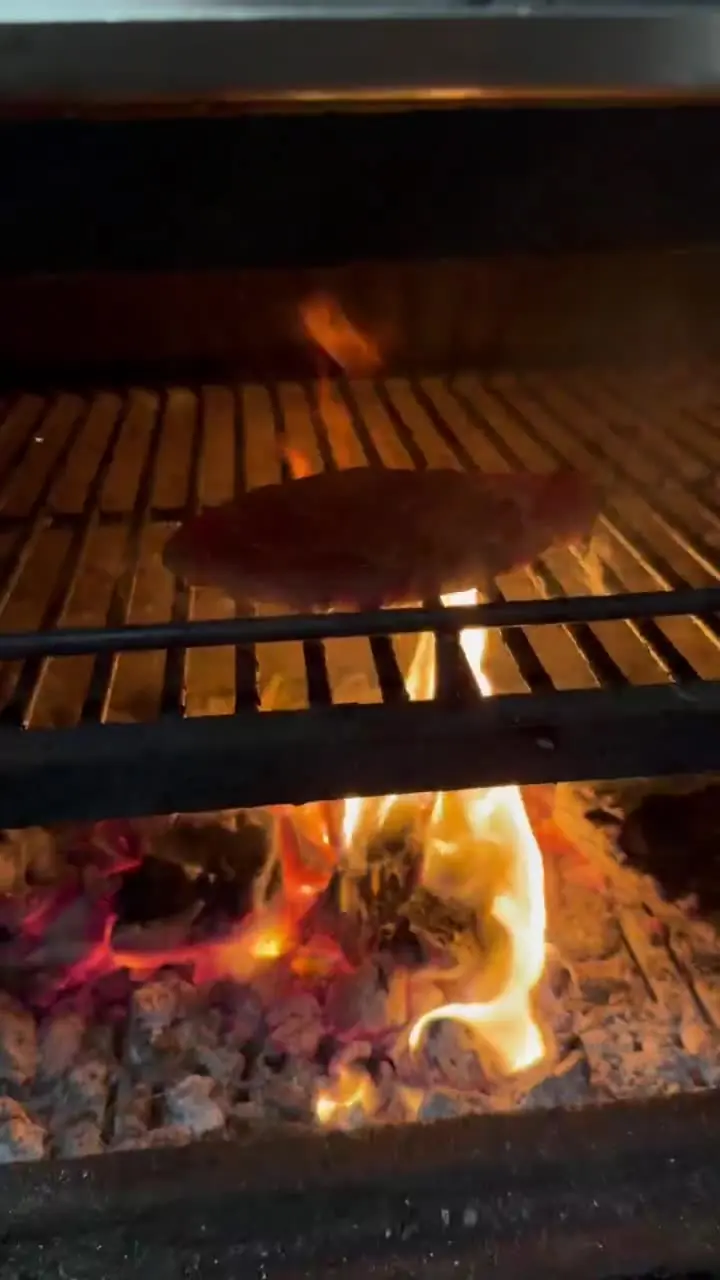
Grilling over charcoal is the purest way to cook a good lobster. It is split lengthways, brushed with olive oil and laid shell down over the coals, so the meat cooks in its own juices while the shell chars and gives off a faint smokiness. It takes minutes, and timing is everything: a minute too long and a juicy tail turns rubbery.
Spanish menus use a few words for the method. A la parrilla or a la brasa means over charcoal or wood. A la plancha means on a very hot steel griddle: a clean sear, but no smoke. Cocido means boiled, and in the north of Spain boiled lobster is often served cold with salad.
Elsewhere in Spain you will meet lobster in dishes. Arroz con bogavante, lobster rice, is a coastal classic, cooked dry or caldoso, soupy, in a rich lobster broth. Caldereta de langosta, a spiny lobster stew, is the famous dish of Menorca. Both are worth trying, but they fold the lobster into a sauce. If you have chosen one animal from a tank, charcoal lets you taste exactly what you chose.
How to Eat a Whole Lobster at the Table
A grilled lobster arrives split in half, which makes the tail easy. The claws and the head take more work and hold some of the best bites. Expect a cracker, a thin pick and a bowl for the shells, and use your fingers. A spiny lobster has no claws, so there the tail, legs and head are the whole story.
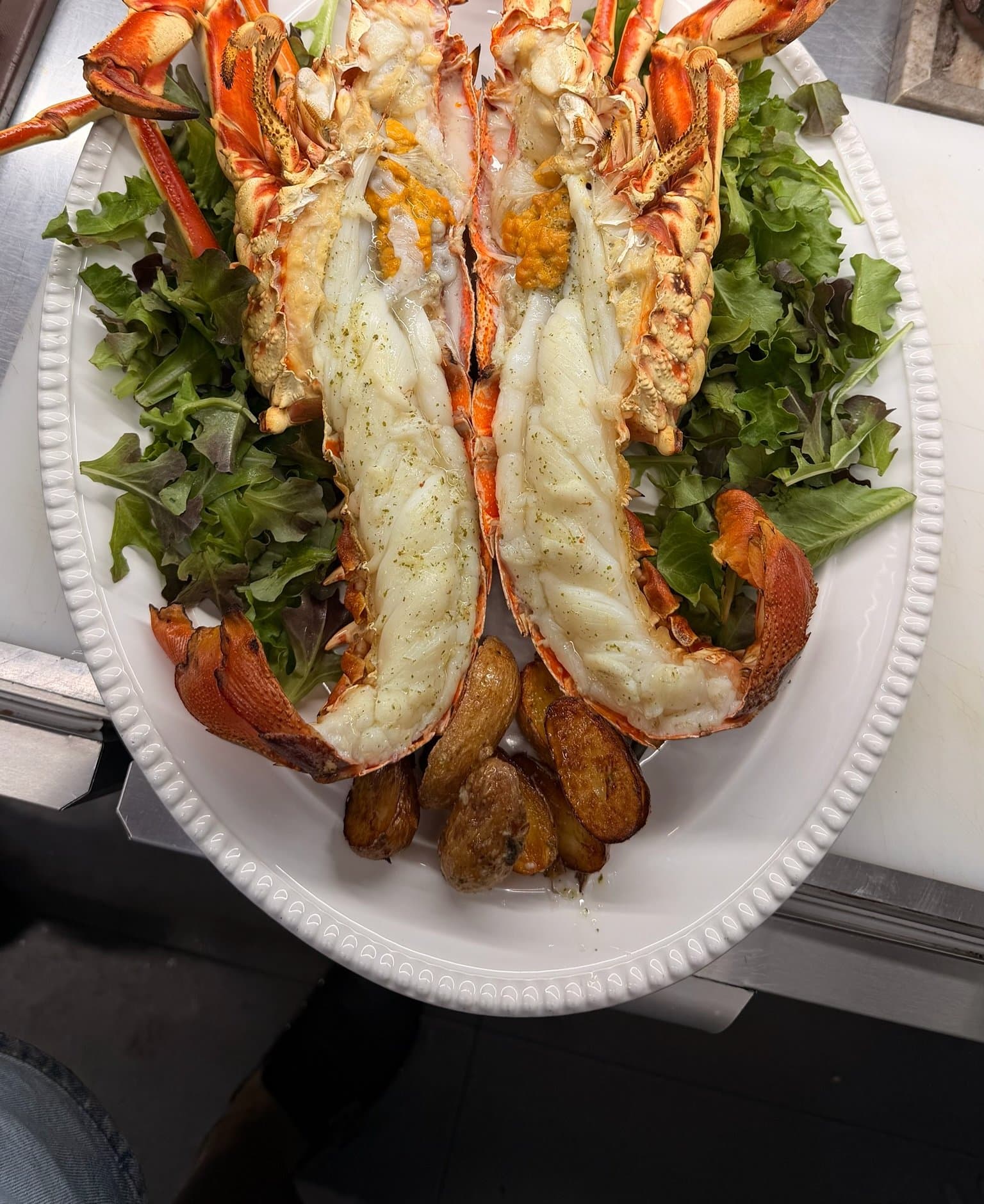
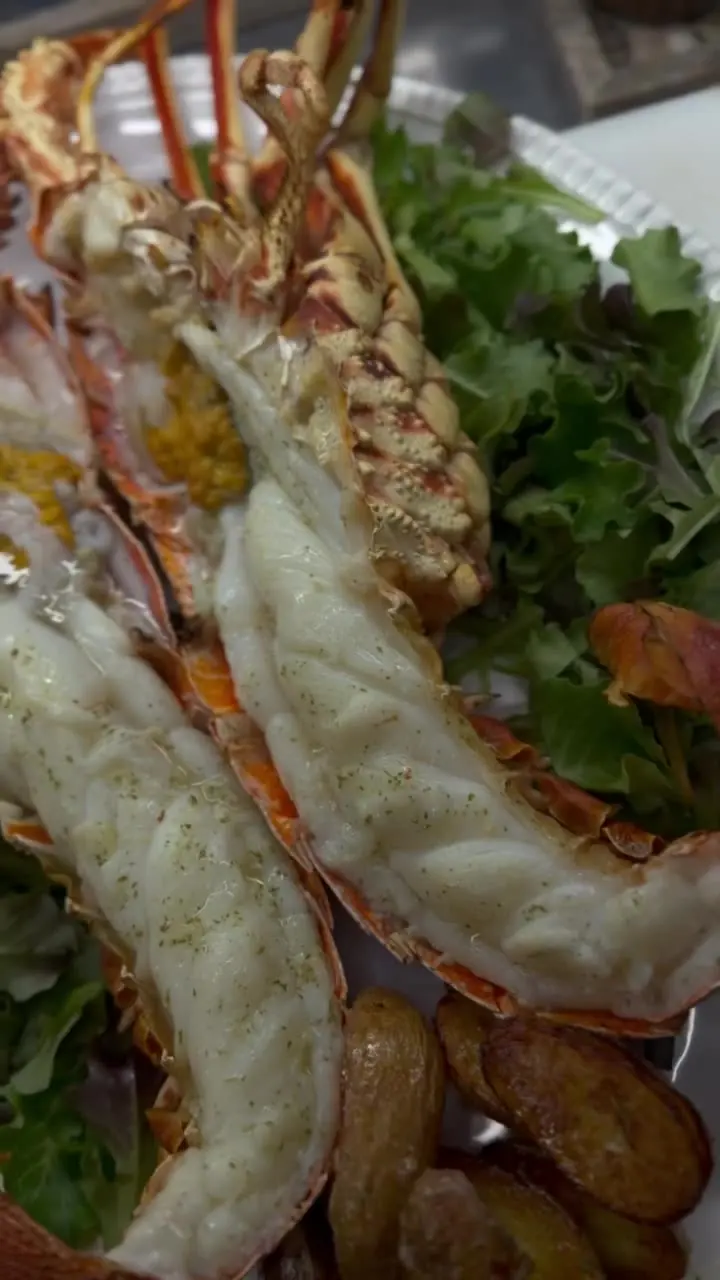
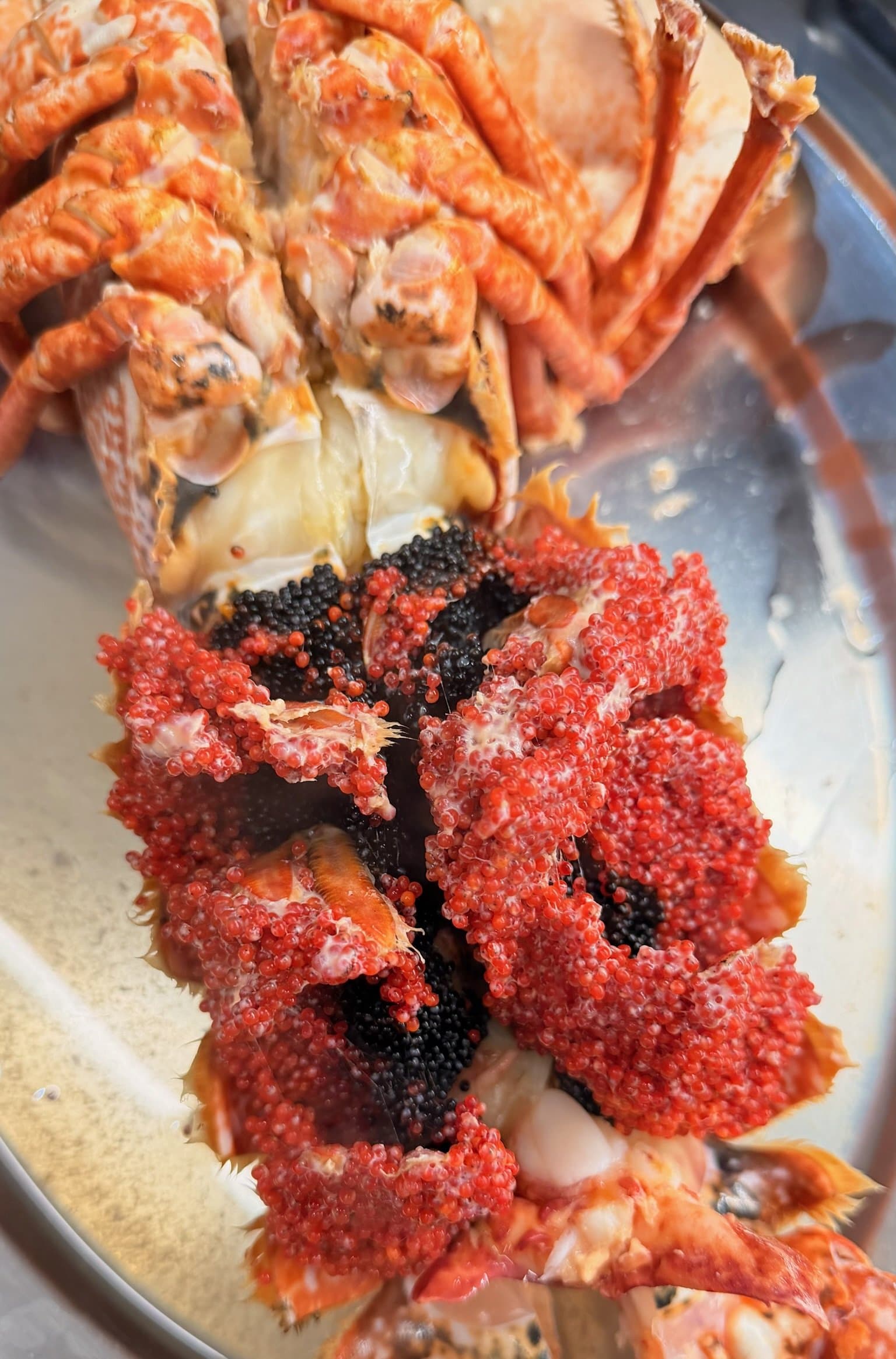
The soft green paste in the head is the tomalley, the lobster's liver, rich and savoury; many people spread it on bread. In a female you may also find the roe, called coral, dark when raw and bright red once cooked. Spiny lobster roe can be generous, as in the photo below, and in Spain it is treated as a delicacy.
Start with the tail
Lift each half of the tail meat out in one piece. A thin dark line along the top is the intestine: pull it away.
Twist off the claws
Twist each claw off at the joint nearest the body, then separate the knuckles, the short sections in between.
Crack, do not crush
Crack the claw on its thick side, wiggle the small pincer off, and the meat should slide out whole.
Pick the knuckles
Push the knuckle meat out with the pick. There is more in there than it looks.
Suck the legs
Snap off the thin legs and squeeze the meat out between your teeth, as you would with a prawn.
Finish with the head
Spoon out the tomalley and coral, eat them as they are or on bread, and clean your fingers with lime.
What to Order With Lobster: Starters, Sides and Wine
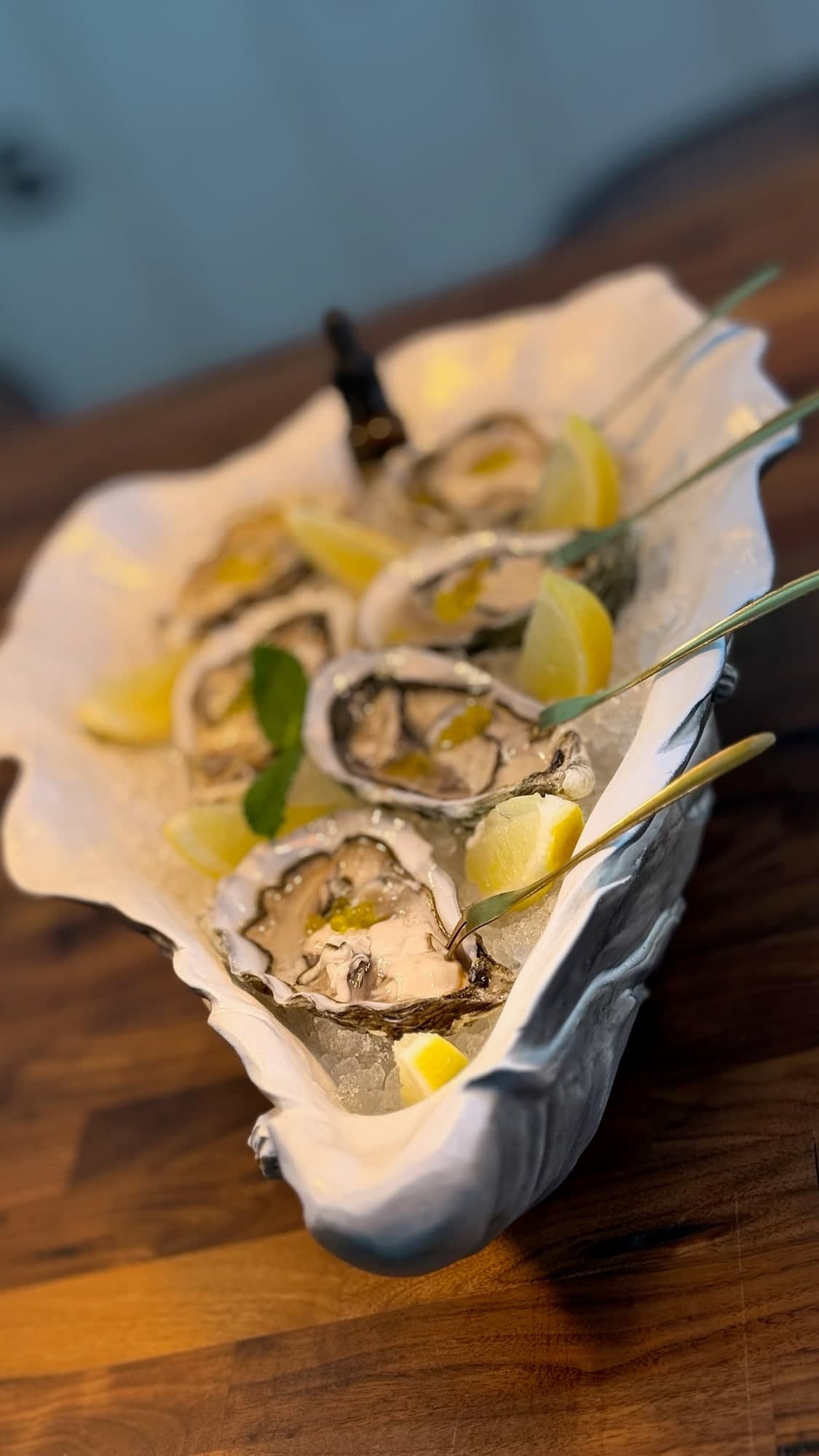
Keep the starters light and cold, so the lobster stays the main event. Half a dozen oysters are the classic opening; our guide to fresh oysters in Marbella explains the French houses you will find, from Gillardeau to Tarbouriech. Grilled razor clams, navajas, are the other easy choice. For a celebration, a small tin of caviar in Marbella before the lobster sets the tone without filling you up.
On the side, less is more. Roasted potatoes, a green salad, lime and good olive oil are all a grilled lobster needs; creamy sauces only get between you and the meat. If someone at the table does not eat shellfish, a restaurant that also grills fish and meat keeps everyone happy.
For wine, reach for a crisp, mineral white. An Albariño from Rías Baixas is the natural Spanish partner, with enough acidity to cut through the richness of the claws; a Chablis Premier Cru or a Pouilly-Fumé does the same with more finesse. Champagne is the classic celebration pairing, and a Blanc de Blancs, made only from Chardonnay, suits the sweetness of lobster especially well. A dry Provence rosé works on a warm terrace evening. Every bottle is listed on the full menu and wine list.
Hungry already?
Book your table now, it takes less than a minute. We confirm within about 15 minutes.
Lobster for a Group: Sharing, King Crab and Seafood Platters
For four or more, one big lobster each is rarely the best order. Two large lobsters split between four, after a round of starters, give everyone some claw and some tail and leave room for the rest of the meal.
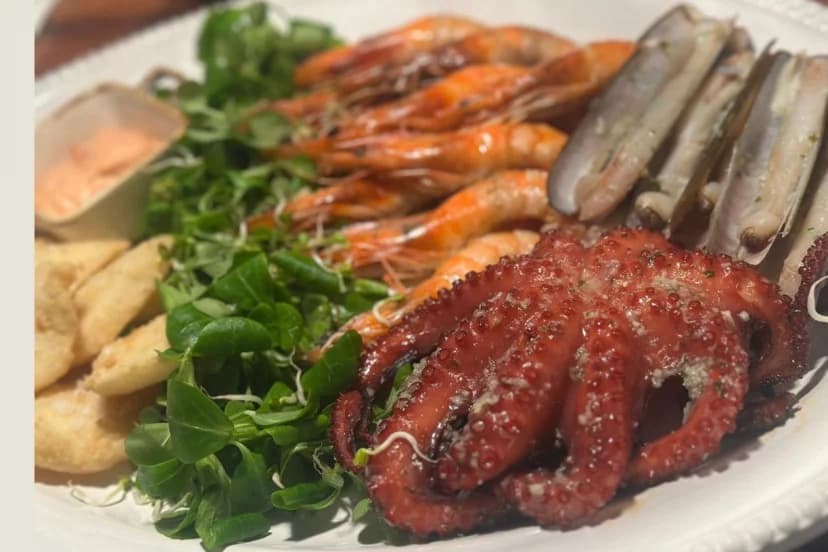
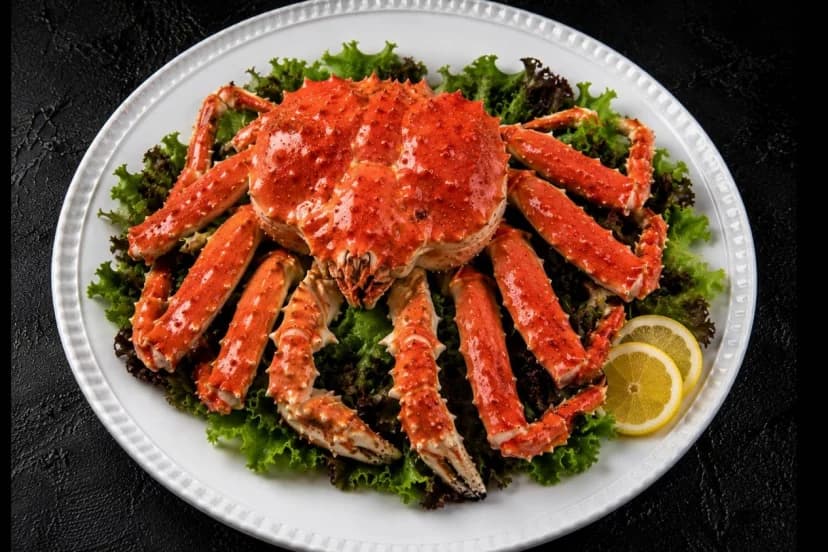
King crab is the other great sharing dish. A whole one weighs 1.8 to 3.5 kilos and is priced per 100 grams, like lobster, and its long legs are packed with sweet white meat. Put one in the middle of the table and the conversation stops for ten minutes. A grilled seafood platter, with prawns, razor clams and octopus or crab, is the easy option when the group wants variety.
Groups should plan ahead: good seafood restaurants around the marina are often small, and tables go early. For more ideas on the neighbourhood, see our guide to where to eat in Puerto Banús.
Lobster at DioGo's in Puerto Banús
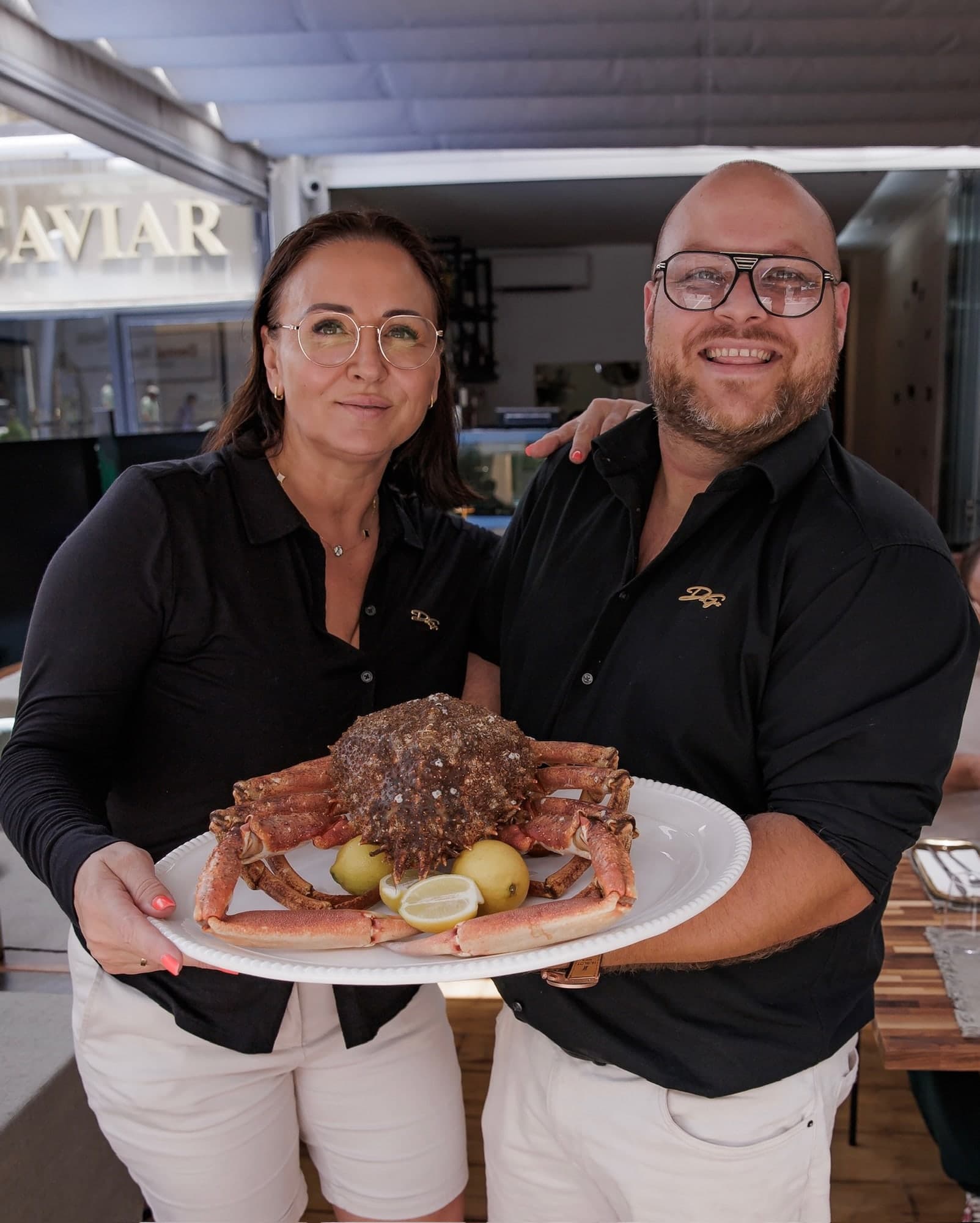
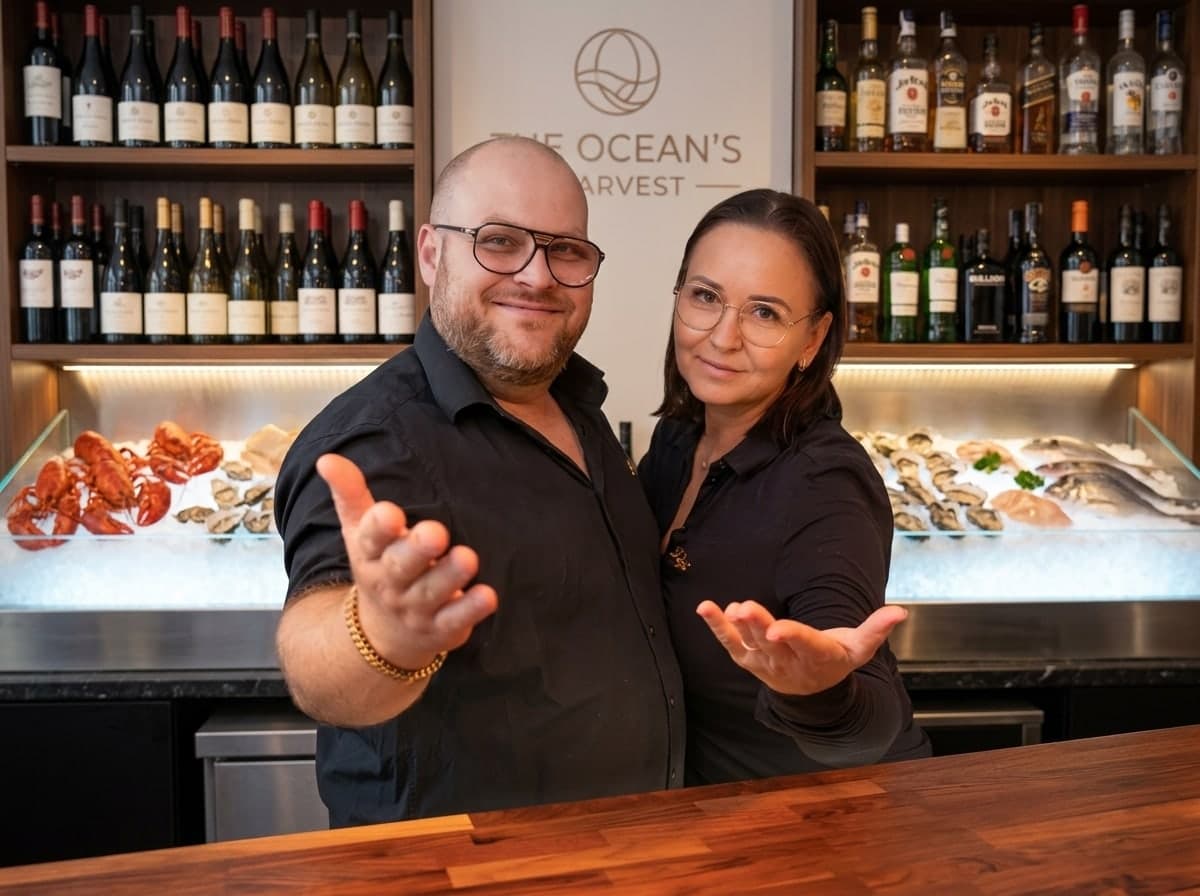
This is how Gosia and I serve lobster at DioGo's Seafood, Meat & Wine, at Calle Francisco Villalón 11 in Nueva Andalucía, two minutes' walk from the marina in Puerto Banús. Our tank is by the entrance, with Canadian lobster, Spanish blue lobster and spiny lobster, and now and then a spider crab looking back at you. You choose your animal yourself. We weigh it at your table, tell you the weight and the price, and only then does it go onto the charcoal grill.
I learned to cook seafood in my grandmother's kitchen in Portugal, simply and over charcoal, and I still cook lobster the same way. It comes back to you split in half at the table, with olive oil, lime and roasted potatoes, and nothing else. Gosia runs the room. Our team speaks Polish, English, Spanish, French and Portuguese, so ask as many questions about your lobster as you like.
The room is small on purpose: six seats at a walnut bar and a handful of tables on the terrace. We are open Tuesday to Saturday from 13:00 to 22:00 and closed on Sundays and Mondays, so come for lunch or an early or classic dinner. You can book a table online, by phone or on WhatsApp, and we confirm within about 15 minutes; for groups of more than eight, please call us first. The oysters, caviar and wines from this guide are all on our menu, and our guests rate us 4.9 out of 5 on Google.
Frequently asked questions
Where can I eat lobster in Marbella?
At a seafood restaurant that keeps lobster alive in a tank, weighs it in front of you and prices it per 100 grams. In Puerto Banús, DioGo's Seafood, Meat & Wine has a live tank with Canadian lobster, Spanish blue lobster and spiny lobster by the entrance; guests choose their lobster, it is weighed at the table and then grilled over charcoal.
How much does lobster cost in Marbella?
Lobster in Marbella is priced by weight, usually per 100 grams, and a whole lobster weighs about 700 grams to 1.4 kilos. Multiply the price per 100 grams by ten for the price per kilo, then by the weight of your lobster. Spiny lobster is often sold at the price of the day, so ask for the exact figure before it is cooked.
What is the difference between bogavante and langosta?
Bogavante is a lobster with two large claws, such as the Canadian lobster or the European blue lobster. Langosta is the spiny lobster, which has no claws, long antennae and nearly all its meat in the tail. English menus in Spain often translate both as "lobster", so look for the claws.
Is lobster in Spain sold by weight?
Yes. Lobster, spiny lobster and king crab are normally sold by weight in Spain, with the price shown per 100 grams or per kilo. A fair restaurant weighs the whole animal in front of you and tells you the total before it is cooked.
How big is a lobster for two people?
For two people sharing lobster as the main course, with starters, a lobster of about 1.1 to 1.4 kilos is a comfortable size. A lobster of around 700 grams is a generous main course for one person. Only about a quarter to a third of a lobster's weight is edible meat.
Can I choose my own lobster in Puerto Banús?
Yes, at restaurants with a live tank. At DioGo's Seafood, Meat & Wine in Puerto Banús, guests choose their lobster, spiny lobster or crab from the tank by the entrance, and it is weighed at the table before it goes onto the charcoal grill.
Is grilled lobster better than boiled lobster?
For flavour, grilling over charcoal usually wins: the lobster is split, brushed with olive oil and cooked shell down, so the meat stays juicy and takes on a light smoky note. Boiling is gentler and suits lobster served cold.
What wine goes with lobster?
A crisp, mineral white is the safest choice: Albariño from Rías Baixas, Chablis Premier Cru or Pouilly-Fumé. Champagne, especially a Blanc de Blancs, is the classic celebration pairing, and a dry Provence rosé works well on a warm evening.
Do I need to book a lobster restaurant in Marbella?
For dinner, yes, especially from Thursday to Saturday and in summer, because good seafood restaurants in Puerto Banús are often small. DioGo's is open Tuesday to Saturday from 13:00 to 22:00, takes bookings online, by phone and on WhatsApp, and confirms within about 15 minutes.