
Guide
Where to Eat in Puerto Banús: A Local Restaurateur's Guide
By Diogo BritoPublished 12 min read
How the restaurants of Puerto Banús work, when to eat, when to book, how to read the menu and the bill, and how to tell a good table from an expensive view, written by a restaurateur who cooks two minutes from the marina.
Your table in three steps
Step 1 of 3
- When
- Guests
- Details
In this guide
- Where to Eat in Puerto Banús: The Short Answer
- What Time Do People Eat in Puerto Banús?
- Do You Need to Book a Restaurant in Puerto Banús?
- How to Spot a Good Restaurant on the Marina
- What to Eat in Puerto Banús
- Prices, Menus by Weight and Tipping in Spain
- Getting to Puerto Banús and Around the Marina
- Dinner in Puerto Banús: Terraces, Sunset and the Evening
- DioGo's: Our Seafood Restaurant in Puerto Banús
Where to Eat in Puerto Banús: The Short Answer
Puerto Banús is the marina a few kilometres west of Marbella's old town: superyachts on one side of the quay, designer shops and restaurant terraces on the other, and the mountain of La Concha behind it all. It is compact. You can walk from one end of the waterfront to the other in a quarter of an hour, and almost every restaurant you will consider is within that walk.
The restaurants fall into two groups. The first row faces the boats, and part of what you pay for there is the view and the people-watching. The second group sits in the streets behind the port and towards Nueva Andalucía, one or two minutes from the water: usually quieter, often smaller, and where people who live here tend to eat on an ordinary evening.
Neither group is wrong. A cocktail at sunset on the front row is a classic Puerto Banús experience. For the meal itself, the short answer is this: decide what you want to eat first, then find the place that does that one thing well, and do not let the view choose for you.

What Time Do People Eat in Puerto Banús?
Later than most visitors expect. In Spain, lunch is the main meal of the day and usually starts around 14:00, often running until 16:00. Dinner starts from about 21:00, and on a summer weekend a table sitting down at 22:00 is nothing unusual. Arrive at 19:00 and you may find the staff still laying the tables.
Puerto Banús is more flexible than a Spanish village, because so many of its guests come from countries that eat earlier. Still, the rhythm of the day is Spanish: plan either a long lunch and a light dinner, or a light lunch on the beach and a proper dinner.
One practical note from our side: at DioGo's we serve from 13:00 and close at 22:00, so we are a place for lunch or for an early or classic dinner rather than a late night. If you like to eat at 19:00 or 20:00, that suits us well.
| Time | What locals do | Tip for visitors |
|---|---|---|
| 9:00–11:00 | Café con leche and a tostada con tomate, toast with grated tomato and olive oil | The Andalusian breakfast, best at a café counter. |
| 12:30–14:00 | A caña (small beer) or a vermut with olives | The aperitivo is small on purpose. Save your appetite. |
| 14:00–16:00 | Lunch, the main meal of the day | The time for espetos on the beach. DioGo's serves from 13:00. |
| 17:00–20:00 | Beach, siesta, a walk along the quay | Traditional kitchens may be quiet. |
| 19:30–21:00 | Aperitivo on a terrace as the light goes down | The golden hour on the marina. |
| 21:00–23:00 | Dinner, often long and unhurried | Book ahead in season. DioGo's closes at 22:00, so book an early or classic dinner there. |
Do You Need to Book a Restaurant in Puerto Banús?
For dinner, usually yes. From Thursday to Saturday, throughout July and August, and around Easter, the restaurants people want to eat at fill up in the evening. Walking in at 21:00 on a Saturday in August is a gamble. Lunch and early-week evenings outside high season are far more relaxed, and walk-ins are normally fine.
Booking in Spain is informal. Many restaurants take reservations through a form on their website, by phone or by WhatsApp, and a short message with your name, the day, the time and the number of people is all it takes. If you want a terrace table, or a table for a special occasion, say so when you book, not when you arrive. For a date, our guide to a romantic dinner in Puerto Banús has more on choosing the right table and time.
Groups need more planning. A table for ten on a busy night means rearranging a room, and smaller restaurants may have only one or two ways of doing it. At DioGo's we ask groups of more than 8 to call ahead. Everyone else can book a table online, by phone or on WhatsApp, and we confirm within about 15 minutes.
Hungry already?
Book your table now, it takes less than a minute. We confirm within about 15 minutes.
How to Spot a Good Restaurant on the Marina
The good restaurants in Puerto Banús are easy to spot once you know what to look for. The signs below apply anywhere, but they matter most for seafood, where the gap between fresh and frozen is widest and not always visible on the menu. None is a guarantee on its own, but a restaurant that shows most of them is rarely a mistake.
Our guide to seafood in Marbella goes further, with the full seven signs of fresh seafood and how to read a Spanish seafood menu.
A live tank you can see
Lobsters and crabs that are moving, in clean water. You should be able to choose your animal and see it weighed before it is cooked.
Every price has a unit
Anything sold by weight says what the price is for: per 100 g, per kilo or per piece. A number without a unit is where surprises start.
A short menu
A kitchen that buys fresh every day cannot cook two hundred dishes. A short menu that changes with the season is a good sign; a laminated book with photographs of everything is not.
Nobody touting on the pavement
Good restaurants in Puerto Banús rarely need someone in the street calling passers-by in. Their tables are booked by people who have been before.
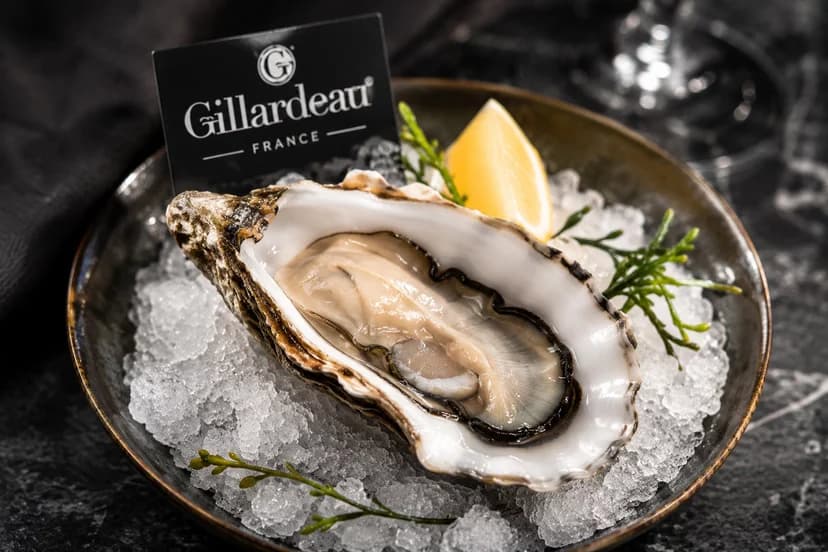
Oysters opened to order
An oyster should be opened just before it reaches you, sitting in its own clear seawater. Pre-opened oysters waiting on a tray have lost the best part.
What to Eat in Puerto Banús
The honest answer is: whatever came out of the sea. This coast sits between the Mediterranean and the Atlantic, and Andalucía's fish markets trade with both.
For a simple, very local lunch, walk to a chiringuito on the beach on either side of the port and order espetos, sardines threaded on a cane and roasted over an open fire, a Málaga tradition much older than the marina. Pescaíto frito, small fish fried in a light batter, is the other classic. Both are best at lunchtime, with your feet almost in the sand.
For dinner, the Puerto Banús classics are grilled shellfish and whole fish. A lobster or a spiny lobster from the tank, grilled and split at the table; a plate of king prawns straight from the charcoal; a whole sea bass for two; and a first round of oysters. If lobster is the plan, our guide to lobster in Marbella explains bogavante and langosta, and if oysters are, start with fresh oysters in Marbella.
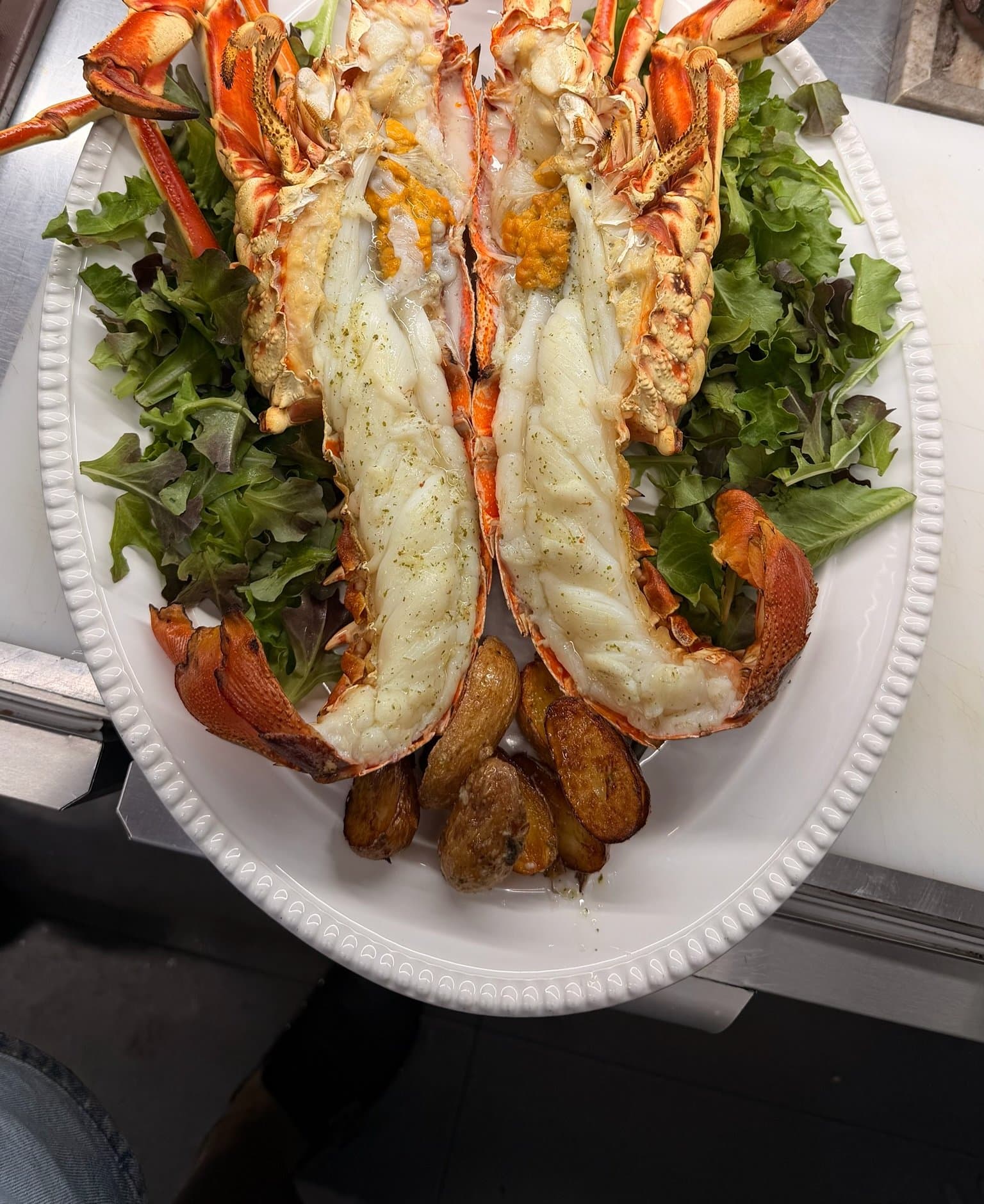
Langosta a la parrilla
Grilled spiny lobster
No claws, a firm and sweet tail, and a shell that chars beautifully over charcoal. Served split in half with olive oil, lime and roasted potatoes, it is the dish many people come to Puerto Banús for.
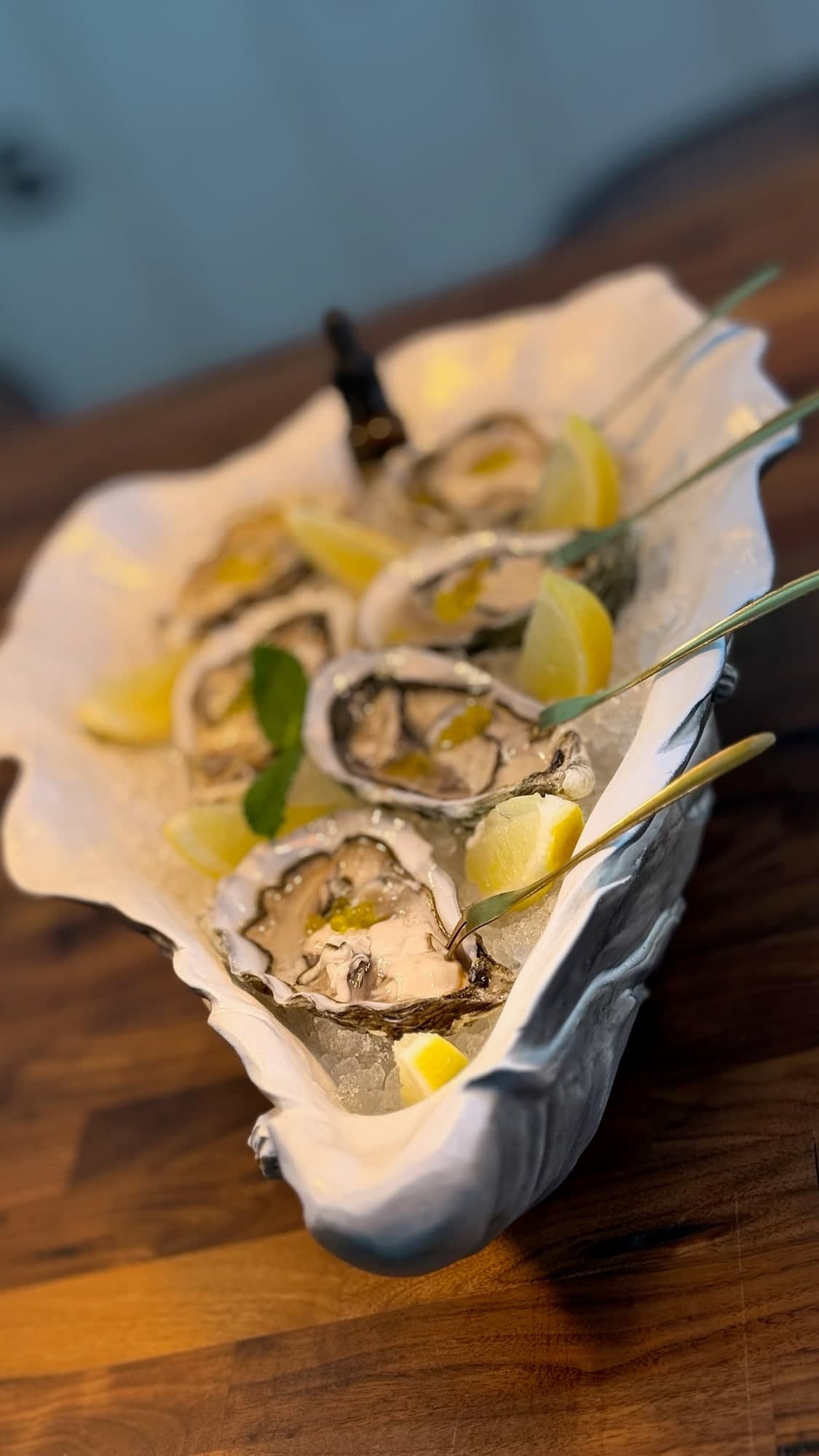
Ostras
Oysters
Most good oysters on this coast come from France. Order a mix, look for clear seawater in the shell, and add lemon rather than sauce.
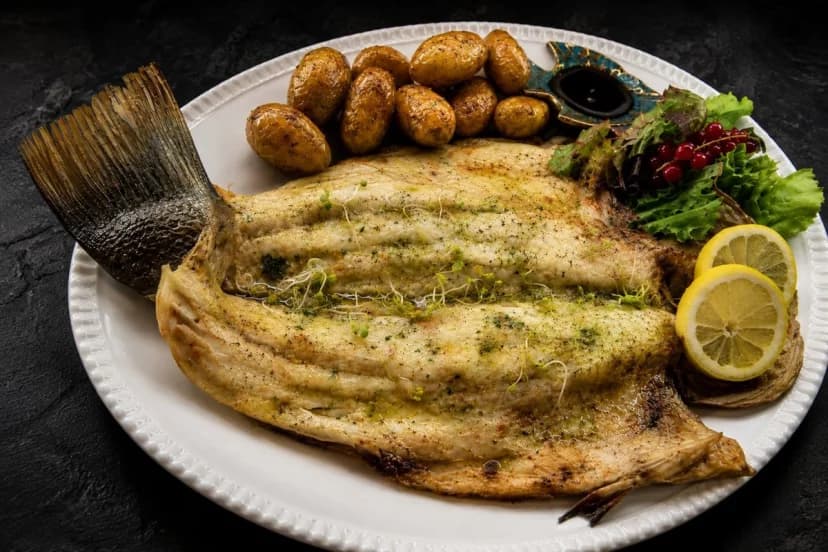
Lubina
Sea bass
Dicentrarchus labrax
A whole fish for two, grilled simply and sold by weight. Soft, juicy white meat that needs nothing more than lemon and good olive oil.
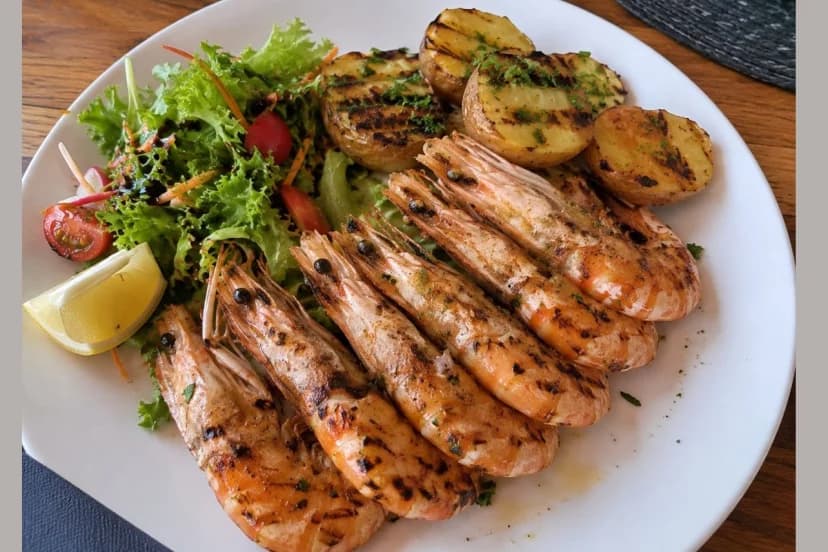
Langostinos
King prawns
Grilled whole, shells on, with the heads full of juice. Eat them with your fingers and do not skip the heads.
Hungry already?
Book your table now, it takes less than a minute. We confirm within about 15 minutes.
Prices, Menus by Weight and Tipping in Spain
Puerto Banús has a reputation for being expensive, and on the front row of the marina it often is. Away from the quay the range is much wider. What catches most visitors out is the way seafood is priced. Lobster, king crab, large prawns and whole fish are sold by weight, and a figure on the menu is often the price of 100 grams, not of the dish. A whole lobster weighs from about 700 g to 1.4 kg.
The fair way, and the way any serious seafood restaurant works, is to choose the animal, see it weighed and hear the total before it goes to the kitchen. If a dish says S/M, según mercado or market price, ask for the figure before you order. In some restaurants, the bread, olives or small starters brought to the table without asking appear on the bill; if you do not want them, simply say so.
Tipping in Spain is not obligatory, and service is not normally added to the bill. Rounding up or leaving around 5 to 10 percent for good service is common practice. Cards are accepted almost everywhere. And in Spain the waiter will not bring the bill until you ask: nobody is rushing you out, so when you are ready, ask for la cuenta.
| On the menu or bill | What it means | What to do |
|---|---|---|
| /100 g | Price per 100 grams of the whole animal or fish | Multiply by ten for the price per kilo, then by the weight. |
| /kg | Price per kilo | Ask for the weight before it is cooked. |
| S/M (según mercado) | Market price, set by the day's catch | Ask for the exact figure before you order. |
| Ud. (unidad) | Price per piece, for example one prawn or one oyster | Check how many come in a portion. |
| Ración / media ración | A full or half portion to share | Half portions are a good way to try more dishes. |
| Pan / cubierto | Bread or a cover charge, used in some places | Fine to refuse if you do not want it. |
| IVA incluido | VAT is included in the menu price | Normal in Spain: the price you see is the price you pay. |
Getting to Puerto Banús and Around the Marina
Puerto Banús is easiest on foot. The marina, the beach and the streets behind them are all within a short walk, and in the evening the quay is one long promenade.
From Marbella's centre or the hotels along the coast, a taxi is the simplest option, and there is usually a rank near the port. On busy summer nights, expect a short wait for the ride back. If you drive, Puerto Banús has public paid parking; spaces fill up on summer evenings, so arriving early helps.
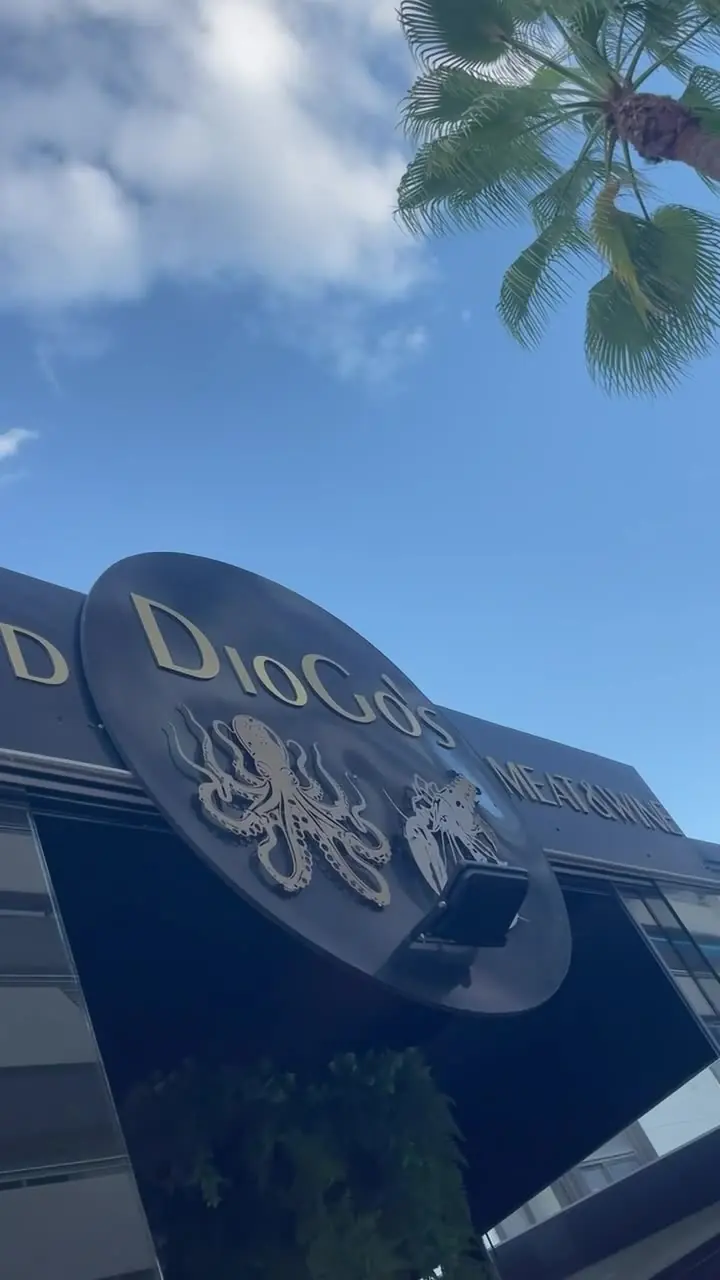
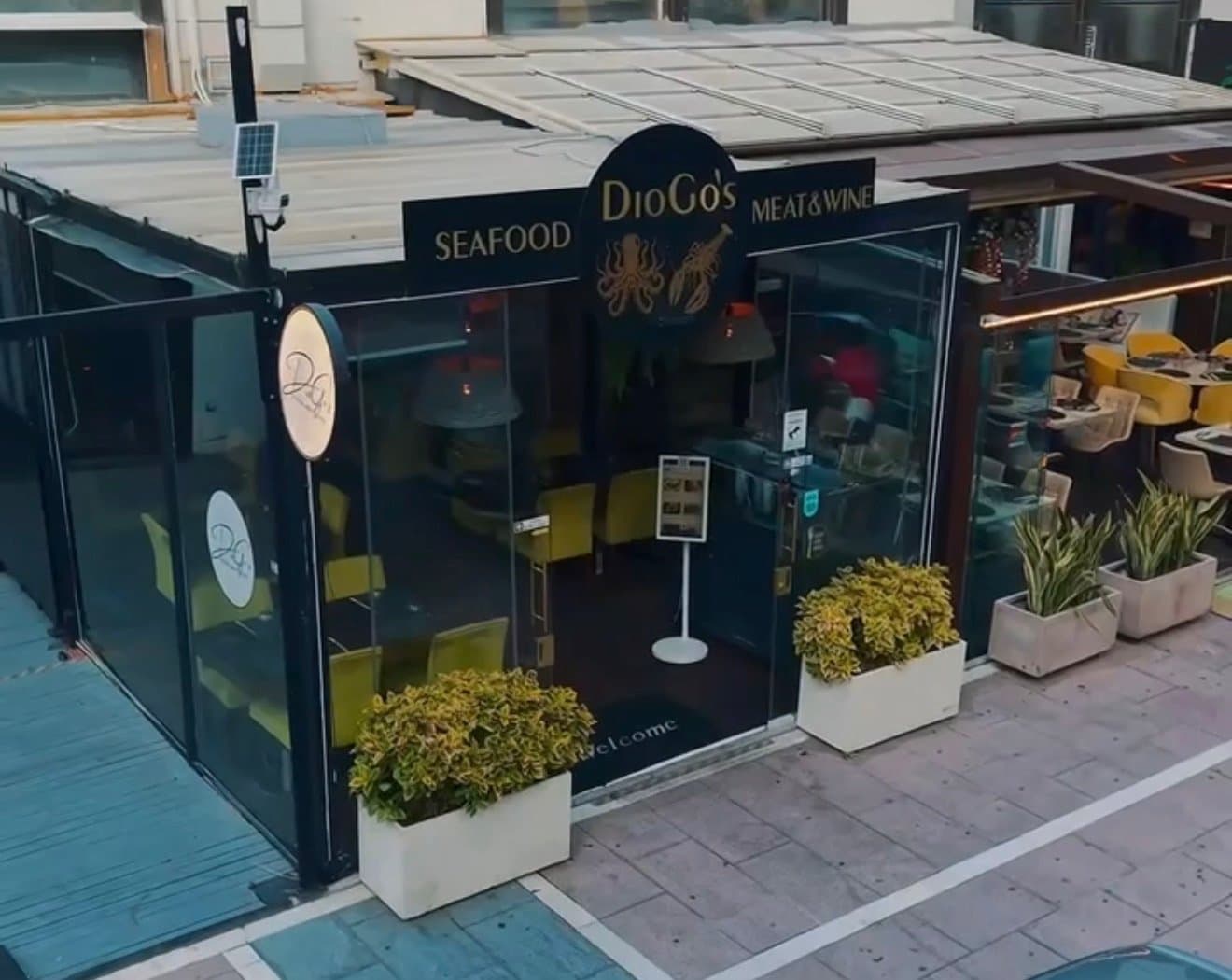
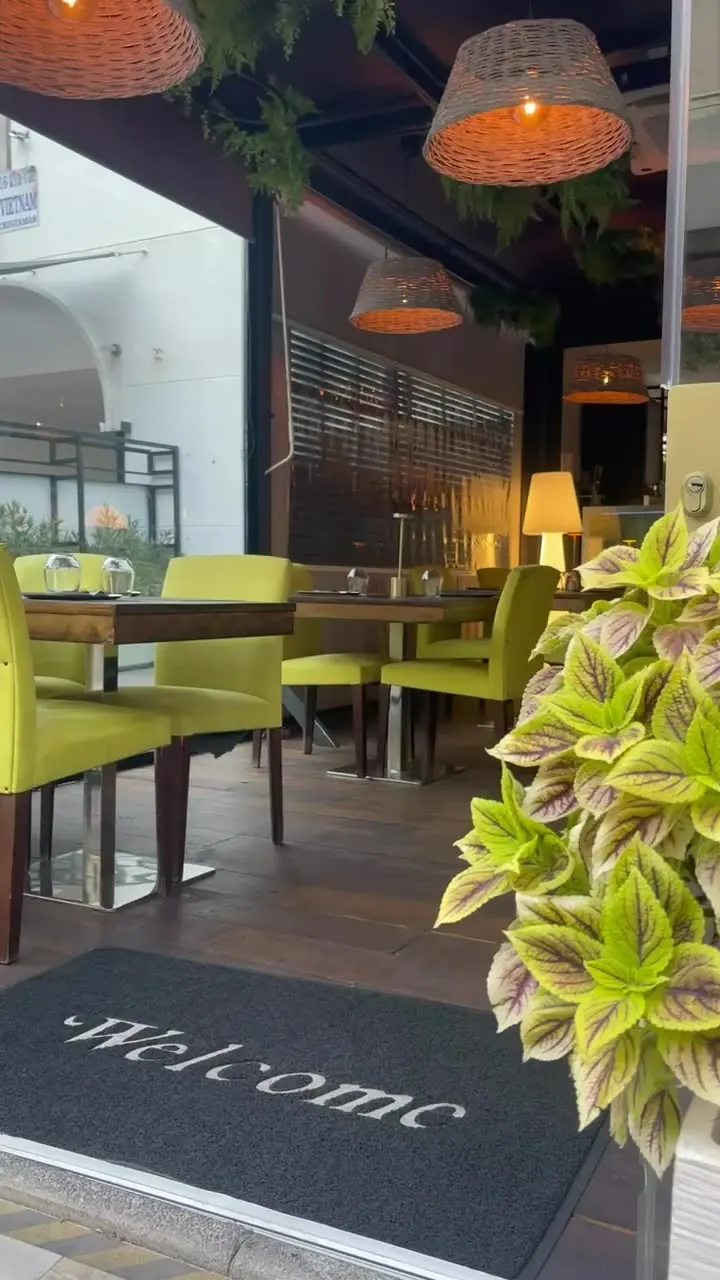
Getting to DioGo's from the marina takes two minutes on foot: we are at Calle Francisco Villalón 11, in the streets just behind the port, with a terrace on the street. Look for the round dark sign with a golden octopus above the entrance.
Dinner in Puerto Banús: Terraces, Sunset and the Evening
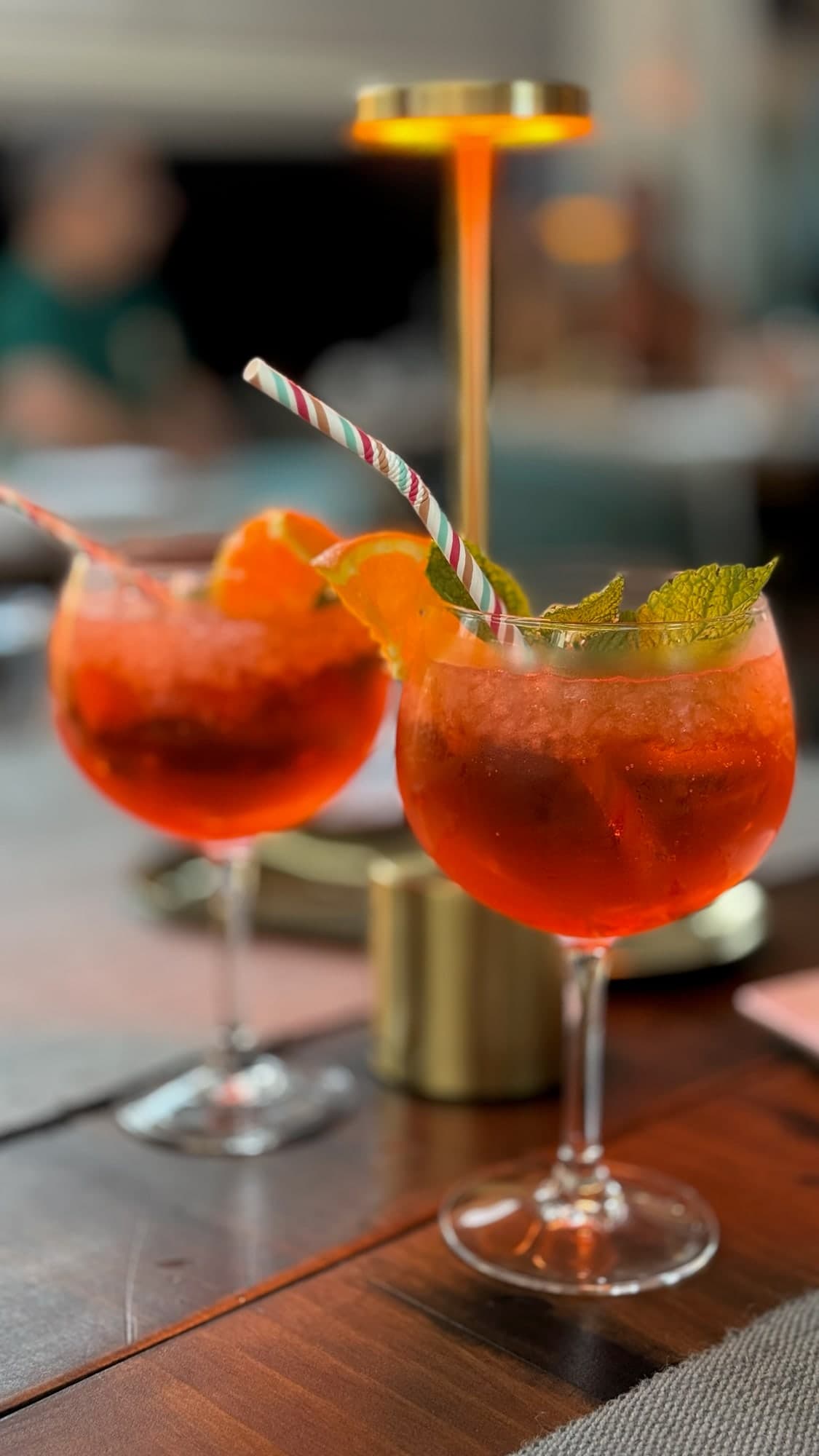
Evenings in Puerto Banús follow a shape. The light turns gold over the boats and people walk the quay. The first drink of the night, an Aperol Spritz, a glass of cava or a cold beer, happens on a terrace between about 19:30 and 21:00 in summer, when the sun sets well after 21:00. Then dinner.
The best plan for most visitors is to split the evening: the aperitivo where the view is, dinner where the food is, ideally on a terrace in a quieter street with room to talk. As for what to wear, smart casual is the norm in the evening; beachwear belongs to the beach and the chiringuitos.
DioGo's: Our Seafood Restaurant in Puerto Banús
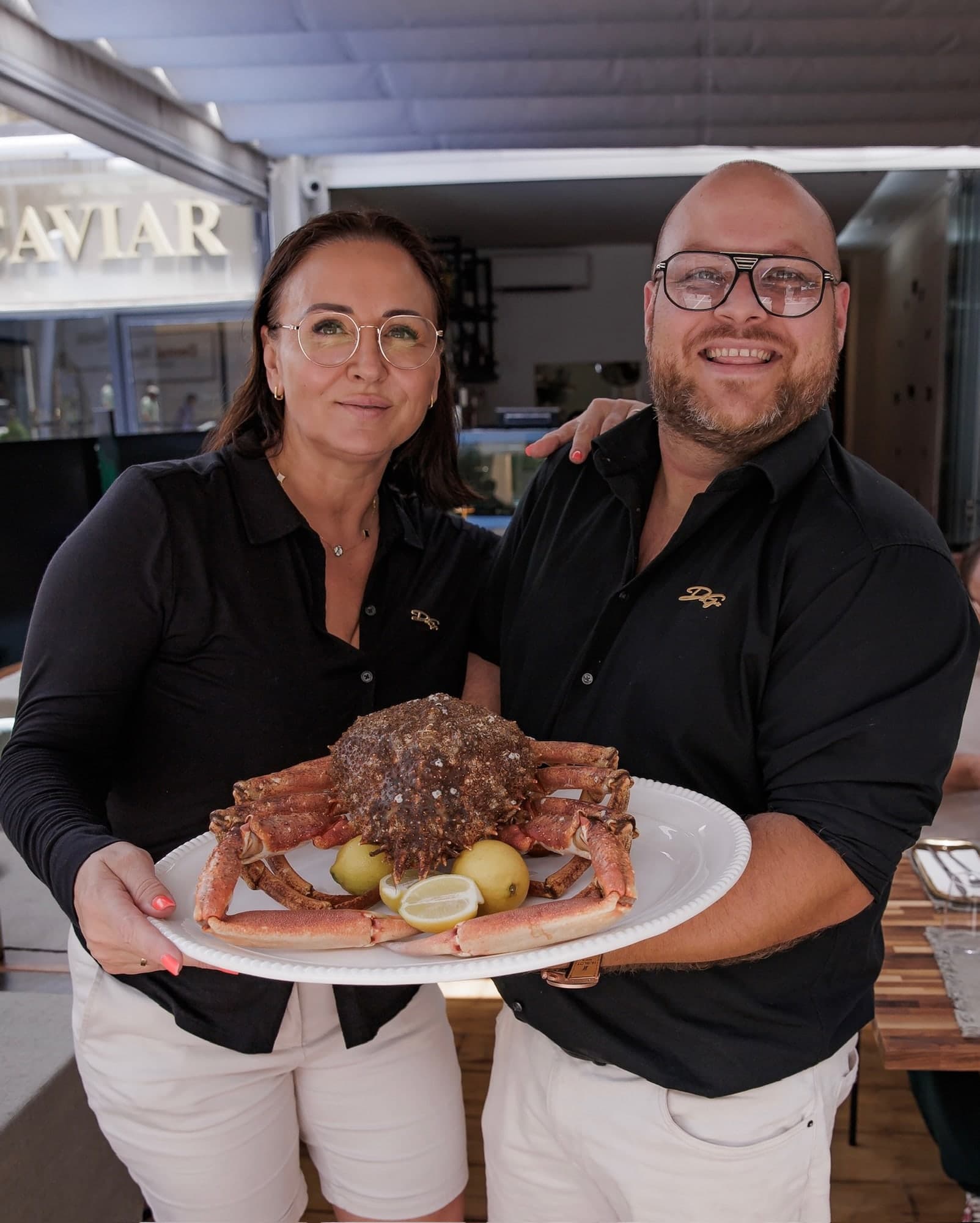
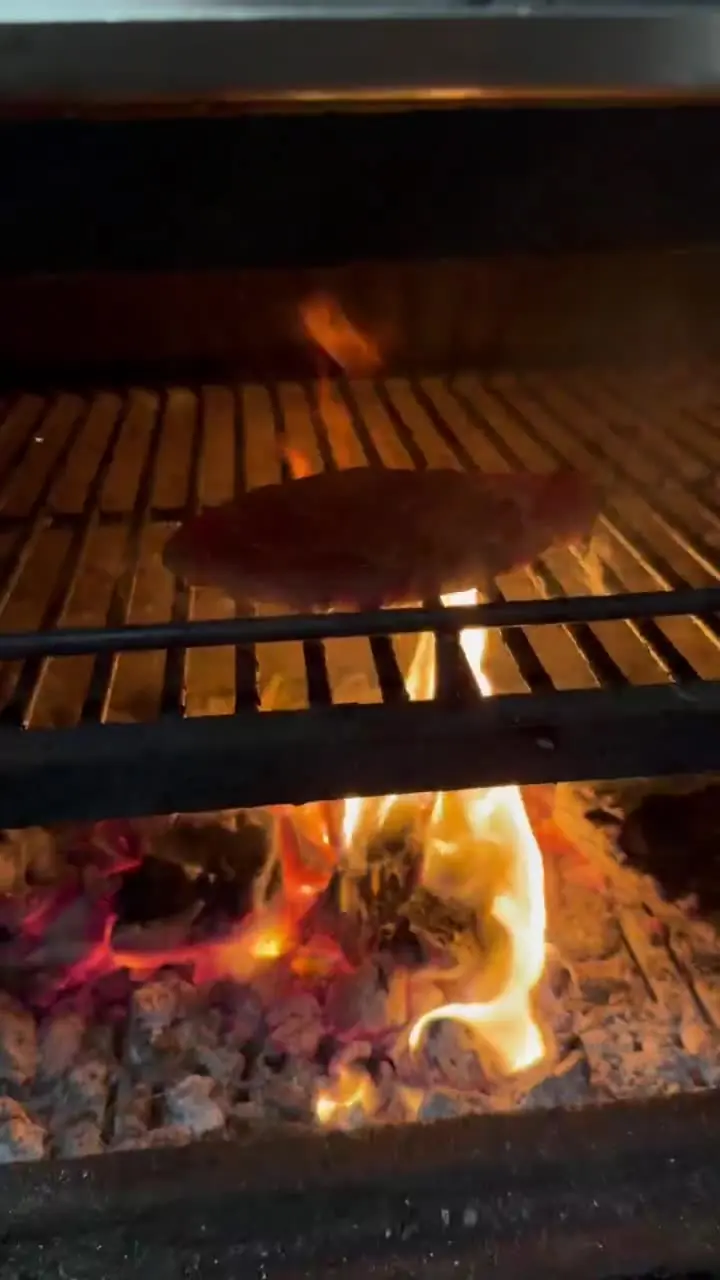
If you want a concrete place to start, come and see us. DioGo's Seafood, Meat & Wine is the restaurant Gosia and I run two minutes' walk from the marina, at Calle Francisco Villalón 11 in Nueva Andalucía. The live tank is by the entrance. You choose your lobster, spiny lobster or crab yourself, and we weigh it at your table before it goes onto the charcoal grill. Then it comes back split in half, with olive oil, lime and roasted potatoes.
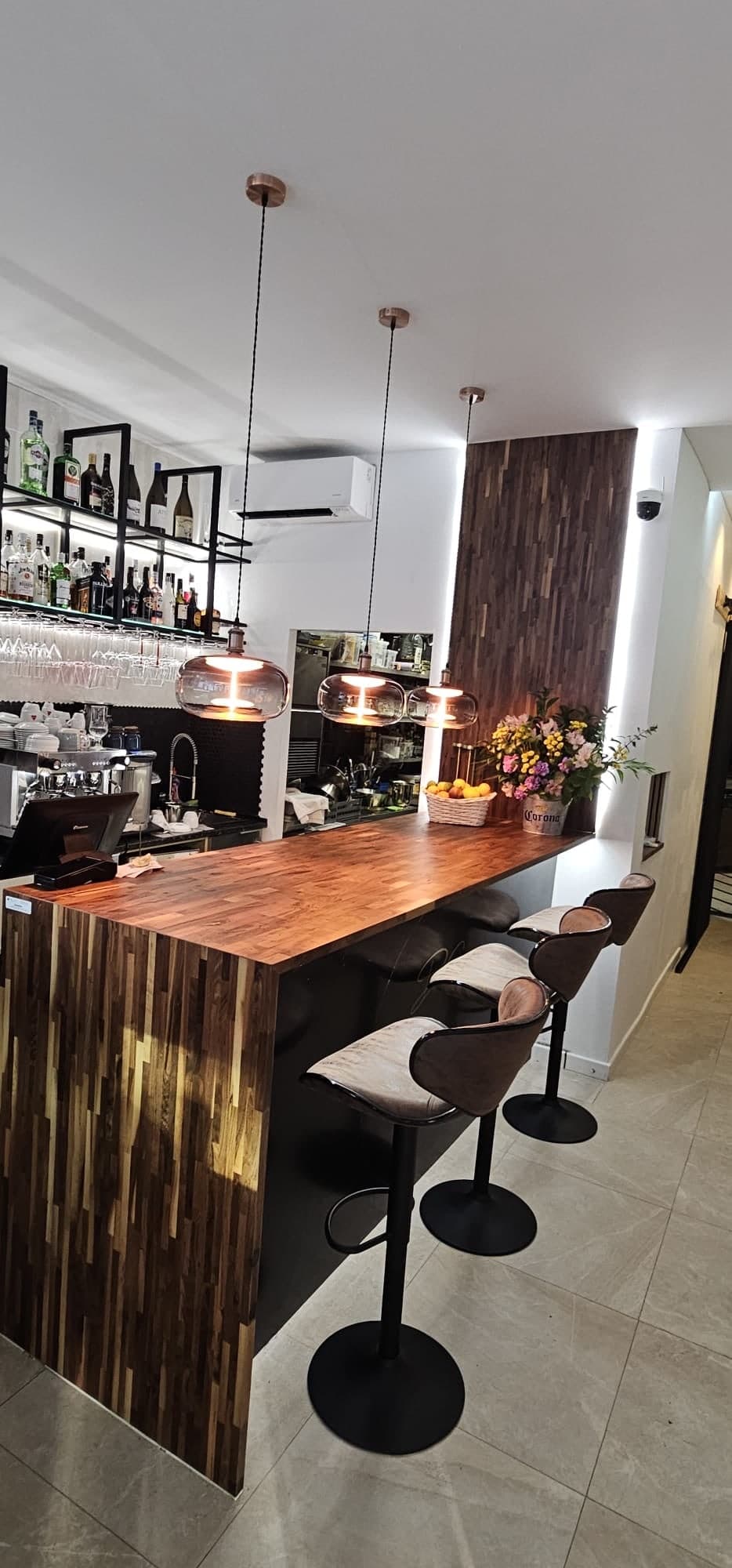
I learned to cook seafood in my grandmother's kitchen in Portugal, simply and over charcoal, and that is still how we work. Gosia runs the room. The restaurant is small on purpose: six seats at a walnut bar and a handful of tables on the terrace, so it is usually one of the two of us who seats you. Our team speaks Polish, English, Spanish, French and Portuguese.
Our menu has lobster, spiny lobster, king crab, carabineros, seven French oysters and caviar, but also dorada and sea bass by weight, lamb chops and tenderloin for anyone who does not eat shellfish, and a chef's choice menu if you would rather not decide. Our guests rate us 4.9 out of 5 on Google. We are open Tuesday to Saturday from 13:00 to 22:00 and closed on Sundays and Mondays, so book a lunch or an early dinner. Groups over 8, please call us first.
Frequently asked questions
Where should I eat in Puerto Banús?
Choose by what you want to eat, not by the view. The front row of the marina is best for a sunset drink, while the streets just behind the port are quieter and often better for a long dinner. For seafood, DioGo's Seafood, Meat & Wine, two minutes' walk from the marina, has a live tank by the entrance and weighs every lobster at the table before grilling it over charcoal.
Do I need to book restaurants in Puerto Banús?
For dinner, yes, especially from Thursday to Saturday, in July and August and around Easter. Lunch and early-week evenings outside high season are usually fine without a booking. Groups should always call ahead.
What time do people eat dinner in Puerto Banús?
Spaniards usually eat dinner from about 21:00, and later on summer weekends. Many restaurants in Puerto Banús also serve earlier for visitors, but kitchens differ, so check the hours before you go.
Is Puerto Banús expensive for dinner?
It can be, especially on the front row of the marina, where the location is part of the price. The streets behind the port offer a wider range. For seafood, check that prices by weight show their unit and ask for the total before anything is cooked.
Should I tip in restaurants in Spain?
Tipping in Spain is not obligatory and service is not usually added to the bill. Rounding up or leaving around 5 to 10 percent for good service is common practice.
Which restaurants in Puerto Banús have fresh seafood?
Look for a live tank with active animals, oysters opened to order and prices by weight with a clear unit. DioGo's Seafood, Meat & Wine in Puerto Banús keeps lobsters, spiny lobsters and crabs alive in a tank by the entrance, and guests choose their animal before it is weighed at the table.
Are Puerto Banús restaurants open on Sunday and Monday?
Many are, especially in summer, but not all, so check before you go. DioGo's Seafood, Meat & Wine is closed on Sundays and Mondays and open Tuesday to Saturday from 13:00 to 22:00.
Is there a dress code in Puerto Banús restaurants?
Smart casual is typical in the evening. Swimwear and bare chests belong to the beach, and a shirt or a summer dress fits in almost everywhere around the marina.
What does S/M mean on a menu in Puerto Banús?
S/M stands for según mercado, market price, which changes with the day's catch. It is normal for top shellfish, but ask for the exact price before you order.